
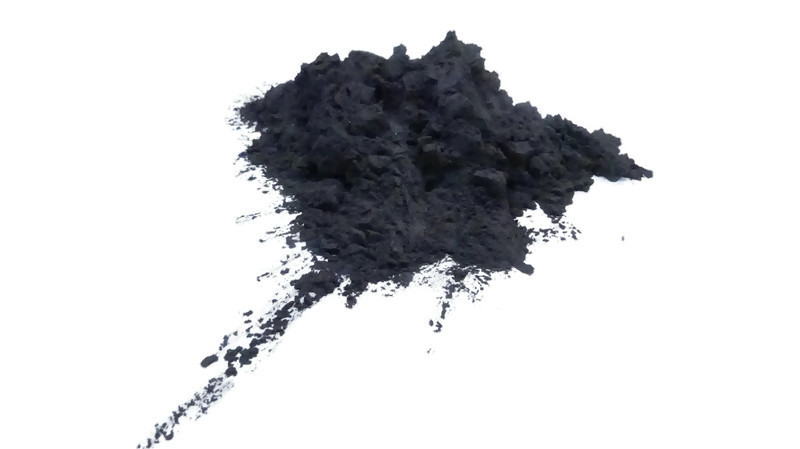
Boron carbide Powder, B4C, FEPA F80 bis F800, Carbon tetraboride CAS: 12069-32-8
€9.52
Available, delivery time: 2-5 days
Product information "Boron carbide Powder, B4C, FEPA F80 bis F800, Carbon tetraboride CAS: 12069-32-8"
Boron carbide (also known as black diamond) is, like our silicon carbide and silicon nitride, an exceptionally hard and therefore wear-resistant material. This has made it the material of choice for nozzle materials, baffle plates (jet mills), ballistic protection elements, cutting tools, and grinding, polishing, or lapping powders. More recent applications have emerged in foundry technology (cost-effective supply of boron), rocket fuels, and semiconductor technology. We supply common fractions. Should you still find anything missing, please feel free to contact us.
Chemical/Physical Specifications
- Color: Black Formula: B4C
- B + C: min. 95.0%
- B: min. 77.0%
- C: max. 18.0%
- B2O3: 1.0%
- Fe: max. 0.5%
- Knoop Hardness: 3000
- Mohs Hardness: < 9.5 (for comparison: Mohs hardness of diamond: 10) Specific gravity: 2.51 g/cm³ Melting point: 1495 °C Crystal structure: monocrystalline
| CAS-Nr.: | 12069-32-8 |
|---|---|
| Color: | Schwarz |
| particle shape: | irregular |
| purity: | min. 95,0 % |
| zur GPSR-Informationspflicht: | Hersteller + Verantwortliche Person: Werth-Metall, Ringstr. 41b, 99428 Grammetal, info@werth-metall.de |
Login
Passend zum Borcarbid

Silicon Carbide (SiC) and Silicon Nitride (Si₃N₄): High-Performance Materials for Advanced Industries Silicon carbide (SiC) and silicon nitride (Si₃N₄) are among the hardest known synthetic materials—only diamond in its natural form surpasses their hardness. Alongside their counterparts in the refractory metals group, they represent the pinnacle of extremely heat-resistant and wear-resistant materials, which are indispensable in numerous high-tech industries. Due to the practically non-existent natural occurrences of SiC and Si₃N₄, production is exclusively synthetic, yielding materials with outstanding mechanical, thermal, and chemical properties. Synthetic Production of Silicon Carbide Since silicon carbide does not occur naturally in sufficient purity, it is industrially produced via the Acheson process or through synthesis from silicon and carbon at extremely high temperatures (approximately 2,000–2,500 °C). This process yields two primary grades: Dark (Black) Silicon Carbide Contains impurities from aluminum and iron oxides Lower purity but more cost-effective Key applications: Abrasives, refractory materials, abrasive coatings Light (Green) Silicon Carbide Higher purity (lower metal oxide content) Superior thermal and electrical insulation properties Applications: Precision abrasives, semiconductor industry, high-performance ceramics ? Note: The color of SiC powder serves as a qualitative indicator of purity—the darker the material, the higher the impurity content. Focus Material: Anthracite Silicon Carbide Powder The anthracite-colored silicon carbide powder in question belongs to the dark SiC grades and is primarily used as an abrasive in industrial applications. Its particulate structure and high hardness make it ideal for processes requiring efficient material removal. Detailed Chemical and Physical Properties Tabelle kopieren Property Specification Significance for Application Chemical Formula SiC Primary constituent of the material Modification α-SiC (Alpha Silicon Carbide) Most stable crystal structure at room temperature Color Anthracite (dark gray to black) Indicator of purity and impurities Particle Size (FEPA) F320 (approx. 30 µm) Standard grain size for abrasive applications; defines material removal rate and surface finish Hardness (Mohs) 9.0–9.5 Comparable to corundum; surpasses many metal oxides Melting Point ~2,730 °C Extremely heat-resistant—ideal for high-temperature processes Density 3.21 g/cm³ Lightweight compared to many metals Thermal Conductivity 120–200 W/m·K High heat dissipation—critical for cooling applications Electrical Conductivity Semiconductor properties Suitable for electronic applications ? FEPA Grain F320: The F320 classification according to the Federation of European Producers of Abrasives (FEPA) corresponds to a mean particle size of approximately 30 micrometers. This grain size is commonly used in precision grinding processes, surface finishing applications, and metalworking. General Industrial Applications of Silicon Carbide Thanks to its extreme hardness, thermal stability, and chemical resistance, silicon carbide is utilized across multiple industries: ✅ Abrasives and Polishing Production of grinding wheels, sandpaper, and polishing pastes Machining of hard metals, glass, ceramics, and gemstones ✅ Refractory Materials Lining for furnaces, waste incineration plants, and steel mills Manufacturing of high-performance ceramics ✅ Electronics & Semiconductor Industry SiC semiconductors for efficient power electronics (e.g., in electric vehicles and solar inverters) Substrate material for power transistors and diodes ✅ Automotive Industry Lightweight components for engines and turbochargers SiC ceramic brake discs (higher heat resistance and longer lifespan) ✅ Aerospace Heat shields and structural components for spacecraft Turbine blades in aircraft engines Safety and Handling of Silicon Carbide Powder Although silicon carbide is not classified as acutely toxic, the following safety precautions must be observed when handling the powder: ⚠️ Avoid Dust Generation Use respiratory protection (FFP2/FFP3 masks) and extraction systems Dust can cause respiratory irritation ⚠️ Minimize Skin and Eye Contact Wear protective gloves and safety goggles In case of contact: Rinse immediately with water ⚠️ Storage Store dry and airtight to prevent moisture absorption Keep away from strong acids and alkalis
Content: 0.1 Kilogramm (€20.00 / 1 Kilogramm)

This silicon powder is mechanically produced from high-purity starting material with at least 99.9% silicon. The very small particle size gives the material increased reactivity and sintering activity, making it particularly interesting for ignition systems, gas generators, technical ceramics, and high-temperature applications. It is also ideally suited for the production of silicon nitride or silicon carbide. Chemical analysis (typical values): Si: > 99.9% Al: 351.3 ppmw Ca: 70.9 ppmw Fe: 75.4 ppmw Ti: 5.1 ppmw P: 1.8 ppmw Cu: 16.2 ppmw Cr: 2.6 ppmw K: 6.9 ppmw V: 0.1 ppmw Ni: 1.5 ppmw Na: 14.7 ppmw Particle size distribution (typical values): D90 7.92 µm D50 4.16 µm D10 1.33 µmSignal word: ATTENTION! Hazard statements H228: Flammable solid Precautionary statements P210: Keep away from heat, hot surfaces, sparks, open flames and other ignition sources. No smoking. P402+P404: Store in a closed container in a dry place.
Content: 0.5 Kilogramm (€53.56 / 1 Kilogramm)

Silicon carbides and nitrides, along with their relatives from the group of refractory metals, are the hardest known materials (after carbon in its diamond modification). Due to the practically non-existent natural SiC deposits, the material is produced exclusively synthetically. A distinction is made between dark (black) and light (green) grades. The dark coloration is due to impurities of aluminum and iron oxides. Therefore, the purity can be estimated purely qualitatively based on the color of the delivered product. Generally, the lighter grades exhibit greater hardness. Our silicon carbide is among the brightest and (ultra)fine grades. Suitable applications include: Production of high-stress ceramic components; Grinding and lapping powders; Refractory applications; Friction elements. Chemical/physical properties (typical): Formula: SiC; Modification: Alpha SiC; Color: Gray; Carbon class="sw-text-editor-table__col-selector" style="height: 411px;" contenteditable="false">29 - 30.0 %Oxygenmax. 2.0%Aluminiummax. 0.03%Calciummax. 0.01%Ironmax. 0.05%BET14 - 16 m²/gRaw density1.6 - 1.8 g/cm³D100.4 µmD500.75 µmD901.5 µm
Content: 0.1 Kilogramm (€41.70 / 1 Kilogramm)

Silicon nitride is a remarkable material. Similar to boron nitride, silicon carbide, or tungsten carbide, it exhibits the extreme hardness typical of technical ceramics. However, it is significantly less sensitive to strong temperature changes (thermal shock). As a result, despite its comparatively high price, it is already used in large quantities in automotive sensors or as nozzle material.Chemical/physical properties (typical)Formula: Si3N4Modification: Alpha Si3N4Color: GrayCarbonmax. 0.5%Oxygenmax. 2.0%Aluminiummax. 0.08%Calciummax. 0.02%Ironmax. 0.06%BET10 - 12 m²/gFree Simax. 0.2%Alpha Phasemin. 91.0%Purity (Si3N4)min. 98.0%D500.9 µm
Content: 0.1 Kilogramm (€482.00 / 1 Kilogramm)

Silicon nitride is a remarkable material. Similar to boron nitride, silicon carbide, or tungsten carbide, it exhibits the extreme hardness typical of technical ceramics. However, it is significantly less sensitive to strong temperature changes (thermal shock). As a result, despite its comparatively high price, it is already used in large quantities in automotive sensors or as a nozzle material. Chemical/physical properties (typical) Formula: Si3N4 Modification: Alpha Si3N4 Color: Gray Carbon max. 0.5%Oxygenmax. 2.0%Aluminiummax. 0.08%Calciummax. 0.02%Ironmax. 0.06%Free Simax. 0.2%Alpha Phasemin. 91.0%Purity (Si3N4)min. 98.0%D901000 µm
Content: 0.05 Kilogramm (€200.00 / 1 Kilogramm)

Carbon: 85 - 90% Density: 253 g/dm³Humidity: 0.37%Sieve residue on 71µm sieve: max. 15.0%Sieve passage 71µm sieve: min. 85.0% Typical applications: Dry lubricant (replacement for molybdenum disulfide) Conductive paints and plasticsAdditive against static charge metallurgy Flame retardants
Content: 0.5 Kilogramm (€20.94 / 1 Kilogramm)

This copper powthe is specially designed for optical and functional applicationsdeveloped and manufactured worden. This is pure copper, which has been stabilized with 1,5 % oleic acid. In Kunststoffverarbeitung produces outstanding effects in HDPE, LDPE,ABS othe gar PVC. In this context should during the Fertigung of Masterbatches care must be taken to ensure that the powthe nur geringstmöglichen Scherkräften and Verweildauern during hohen Temperaturen ausgesetzt wird. Beide Faktoren könnten sonst the optical Endergebnis negativ beeinflussen. Ebenfalls is this powthe bestens auf den Einsatz in paints/coatings/2K-Harz and screen-printing processes abgestimmt. A ratio of 5/100 (Pigment/Bindemittel) is for ein optisch high-quality result . This produces an impressive copper-metallic effect - the surface sieht anschließend wie ein polished copper sheet aus. Bitte beachten Sie during the processing: screen printing: Maschenweite should drei mal größer als the D90-Wert des powders sein. Aerosol spray cans: Der D90-Wert des powders sollten mindestens drei mal kleiner als the Düsendurchmesser sein. Lacke/paints: Mechanische Einflüsse durch sehr schnell drehende agitators avoid. Dies würde the Partikel beschädigen and den Metallic-Effekt zerstören. Typische chemical and physical Spezifikationen:Purity des Ausgangsmetalls: 99,9 %Laser diffraction: D10 2,75µmLaser diffraction: D50 9µmLaser diffraction: D90 20,5µmBulk density: ca. 0,95 g/cm³Hiding power: ca. 7500 cm³/gAcetone-soluble constituents: 1,5 % (oleic acid)CAS No.: 7440-50-8 Signal word: Danger! Dangerenhinweise H228 - Flammable solid. H302 - Harmful if swallowed H400 - Sehr toxic for aquatic organisms H411 - Toxic for aquatic organisms with long-lasting effects. Precautionary statements P210 - Keep away from heat, hot surfaces, sparks, open flames and other ignition sources. No smoking. P273 - release in the Umwelt avoid. P301+P310 - If swallowed: Sofort Giftinformationszentrum, Arzt anrufen. P330 - Rinse mouth P370+P378 - In case of fire: Metallbrandpulver/Zement/Sand zum Löschen use
Content: 0.1 Kilogramm (€65.50 / 1 Kilogramm)