
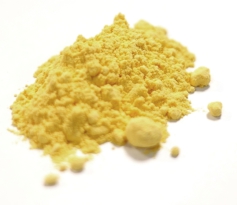
Dextrine, fine powder, WHITE, from potato starch, white dextrine, CAS No.: 9004-53-9

€5.36
Available, delivery time: 2-5 days
Product information "Dextrine, fine powder, WHITE, from potato starch, white dextrine, CAS No.: 9004-53-9"
White dextrin is a modified starch derivative obtained through a controlled, particularly gentle degradation process of starch. In contrast to yellow dextrin, it is produced at lower temperatures and with shorter reaction times. The result: a light white to slightly cream-colored powder with a low degree of degradation, longer molecular chains, and a neutral odor and taste profile.
This gentle processing method makes white dextrin one of the most versatile plant-based binders available. It combines high binding strength with pronounced film formation and significantly higher solution viscosity compared to more degraded dextrins. Where an adhesive requires stability and adhesion, where a coating needs to apply evenly, or where a carrier substance must remain neutral in taste, white dextrin is the proven choice.
Your benefits at a glance
- High binding strength – reliable adhesion on paper, cardboard, textiles, and mineral substrates
- Excellent film formation – smooth, uniform, and flexible films
- High solution viscosity – ideal for stable pastes and coatings
- Neutral in color, odor, and taste – no undesirable influence on the final product
- Low hygroscopicity – good storage stability, minimal tendency to clump
- Very low acid number – minimal corrosion tendency in equipment, high product stability
- Plant-based raw material – renewable and biodegradable
Technical specifications
| Parameter | Value |
|---|---|
| Dry matter content | min. 97.0% |
| Acidity | approx. 0.1 mL NaOH/100 g |
| Solubility at 18.5 °C | 55 – 75 |
| Brookfield viscosity | 16 – 90 mPa·s |
| Appearance | fine white to slightly cream-colored powder |
| Base | Potato starch |
The exceptionally low acidity of approximately 0.1 mL NaOH/100 g demonstrates careful process control with complete neutralization. Free acid residues that could lead to discoloration, odor formation, taste impairment, or corrosion in processing equipment are virtually absent.
Application areas
- Adhesive industry
- Envelope and label adhesives, corrugated cardboard and tube adhesives, paper sack sealing. The high viscosity and controlled, slower dissolution ensure stable adhesives with clean application properties.
- Paper and cardboard processing
- Surface sizing, coating colors, and coatings. The light natural color preserves the paper's whiteness.
- Textile industry
- Sizing agents for yarns and fabrics to improve weavability and reduce thread breakage.
- Construction chemistry and foundry
- Additive in mortar and gypsum systems as well as binder component in molding materials.
- Food and pharmaceutical applications
- Binding, thickening, and filling agents, as well as tablet binders and carriers. Neutral taste, light color, and very low acidity are crucial quality features in these applications.
Please note: Suitability for food or pharmaceutical applications must be verified based on the respective valid batch specification and applicable legal requirements.
Processing instructions
Due to its longer molecular chains and higher residual crystallinity, white dextrin has lower solubility in cold water compared to yellow dextrin. For complete, lump-free dissolution, the following is recommended:
- Slowly sprinkle the powder into cold water while stirring (do not do the reverse)
- Heat the mixture to 50 – 70 °C and continue stirring until the solution is clear and uniform
- Alternatively, allow for longer soaking and soaking times
- After cooling, the viscosity increases – adjust the solids content accordingly to achieve the target viscosity
Storage
Store in a dry, cool place, protected from moisture, in tightly sealed containers.
Frequently asked questions
What is the difference between white and yellow dextrin?
White dextrin is produced at lower temperatures and with shorter reaction times. This results in longer molecular chains, a lighter color, neutral taste, and higher solution viscosity. Yellow dextrin ("British Gum") is more extensively degraded, has a yellow to brown color, and dissolves more quickly in cold water – but with significantly lower solution viscosity.
Why does white dextrin not dissolve completely in cold water?
Due to the gentle degradation process, longer molecular chains and a higher proportion of partially crystalline structure remain. Additionally, fewer hydrophilic end groups are formed. Heating to 50 – 70 °C reliably dissolves the product.
Is white dextrin the same as starch?
No. Starch is the raw material. White dextrin is derived from it through targeted thermal or hydrolytic degradation, resulting in fundamentally different solubility, viscosity, and binding properties.
What does the low acid value of 0.1 mL NaOH/100 g mean?
The value indicates that virtually no free acid residues remain in the product. This means high stability, neutral taste, no tendency to discoloration, and no risk of corrosion to your equipment.
What is white dextrin most commonly used for?
The largest application area is adhesives based on paper and cardboard. It is also established in paper coating, textile sizing, construction chemistry, and as a binding and filling agent in food and pharmaceutical products.
How can I achieve a lump-free solution?
Always sprinkle the powder into cold water and then heat it. If the powder is added to already hot water, the surface of the particles will gelatinize and trap dry material inside.
Is the product biodegradable?
Yes. White dextrin is entirely based on plant-based starch and is biodegradable.
What are the technical specifications of this white dextrin?
The dry matter content is at least 97.0%. The acidity is approximately 0.1 mL NaOH/100 g. The solubility at 18.5 °C is in the range of 55 – 75. The Brookfield viscosity is 16 – 90 mPa·s.
How should white dextrin be stored?
Store in a dry, cool place, protected from moisture, in tightly sealed containers. Due to its low hygroscopicity, storage stability is good, and the tendency to clump is low.
Is white dextrin suitable for food or pharmaceutical applications?
White dextrin is used in these areas as a binding, thickening, and filling agent, as well as a tablet binder and carrier. However, its suitability must always be verified based on the valid batch specification and applicable legal requirements. The product on this page is of technical quality.
| Also known as: | Dextrin, Maltodextrin, binder, Maisstärkedextrin, Stärkegummi |
|---|---|
| CAS-Nr.: | 9004-53-9 |
| Color: | Weiß |
| Löslichkeit: | 55 - 75g/100ml bei 18,5°C |
| Produktcharakter: | feines Pulver |
| Stoffgruppe: | Dextrine |
| Säure: | ca. 0,1 mL NaOH/100g |
| Trockensubstanz: | mind. 97,0 % |
| Viskosität: | 16 – 90 mPa*s (Brookfield) |
| kind of product: | binder |
| material: | Dextrine, white |
| particle shape: | irregular |
| zur GPSR-Informationspflicht: | Hersteller + Verantwortliche Person: Werth-Metall, Ringstr. 41b, 99428 Grammetal, info@werth-metall.de |
Login
Already seen?
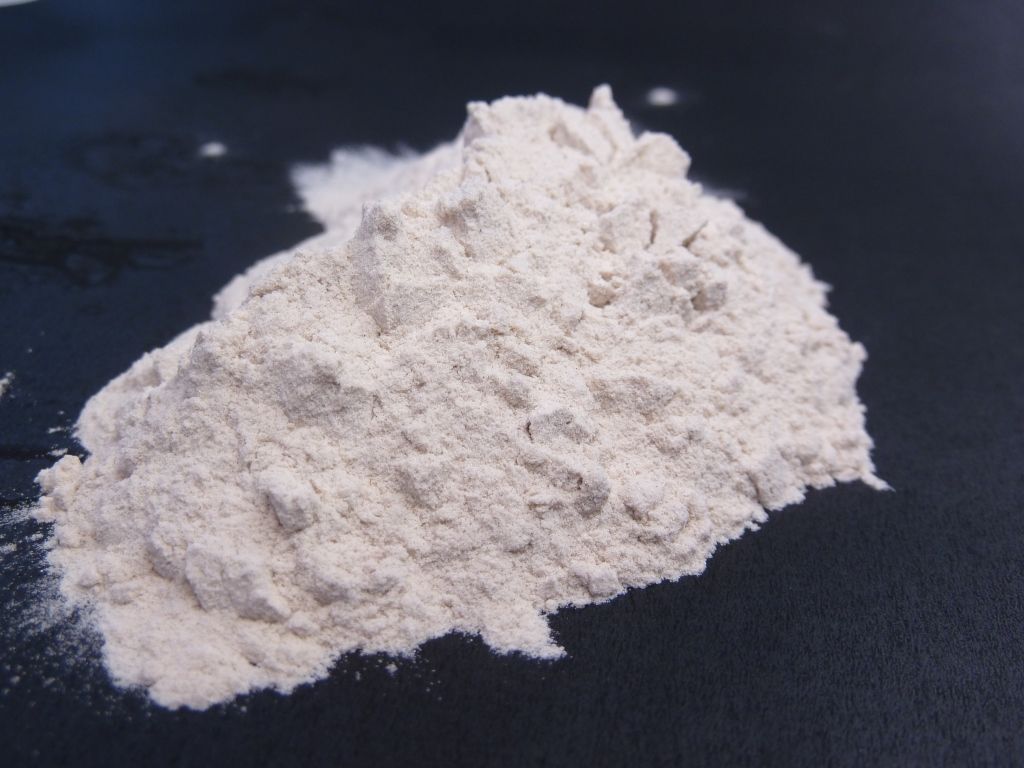
Gummi Arabicum ist ein Naturprodukt mit sehr vielen nützlichen Eigenschaften. Es weist nur sehr geringe Aschewerte auf und ist eines der ältesten bekannten Bindemittel und besitzt bereits eine Erwähnung in der Bibel. Ob in der Kosmetik, in Lebensmitteln, der Gummiverarbeitung - überall findet es noch heute mannigfaltige Anwendungen. Das Produkt ist staubfein vermahlen und weist eine leichte rosa Färbung auf. Es wird von Akazienbäumen gewonnen.ProduktdatenCAS-Nr.: 9000-01-5 alkohollöslich: neinwassserlöslich: ja Trocknungsverlust: 8,3 % (im Auslieferungszustand)Asche (C): 2,9 % Granulometrie: [d90 100µm]; [d50 63µm]; [d10 10µm]
Content: 0.5 Kilogramm (€21.42 / 1 Kilogramm)
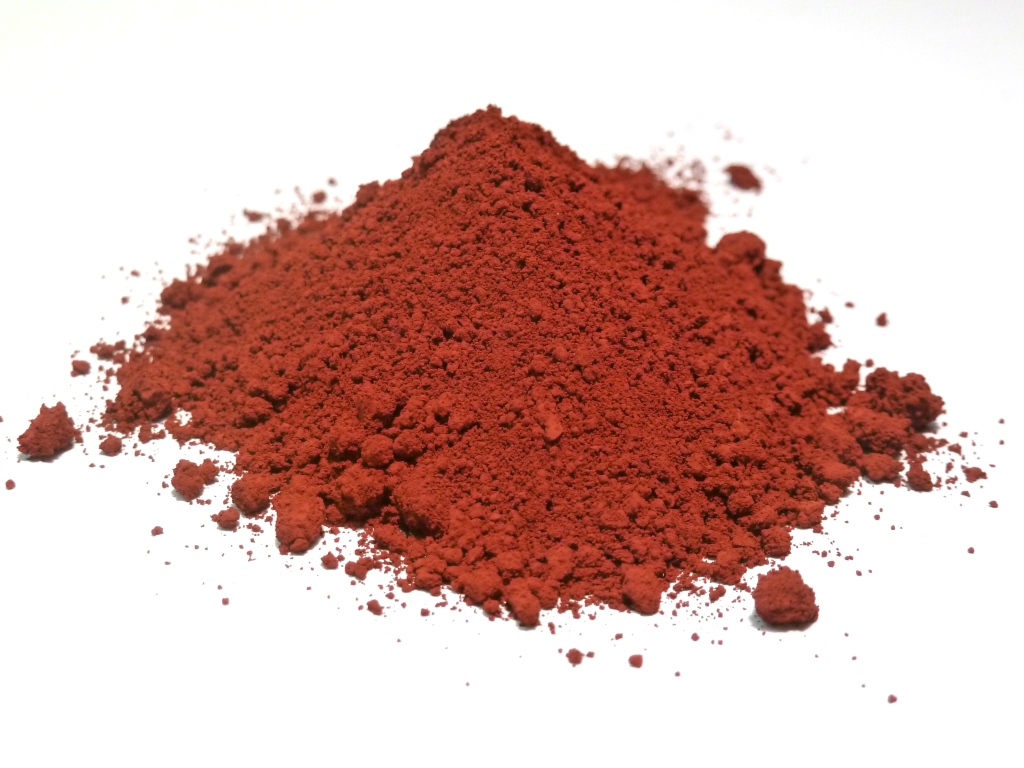
Dieses rote Eisenoxid wird synthetisch hergestellt und zeigt neben einer hohen Reinheit eine äußerst geringe Primärteilchengröße. Sein intensives Zinnoberrot lässt sich ideal in Pigment- und Keramikrezepturen verwenden.Auch die Verwendung als Katalysator oder allgemein als chemische Reagenz ist wegen der geringen Teilchengröße ideal möglich.Fe2O3min. 97,50 %Wasserlösliche Bestandteilemax. 0,5 %Siebrückstand 45µmmax. 0,06 %pH-Wertca. 4,5Ölzahlca. 28 g/100gDichteca. 5,2 g/cm³Leitwert500 µS/cm
Content: 0.5 Kilogramm (€16.66 / 1 Kilogramm)
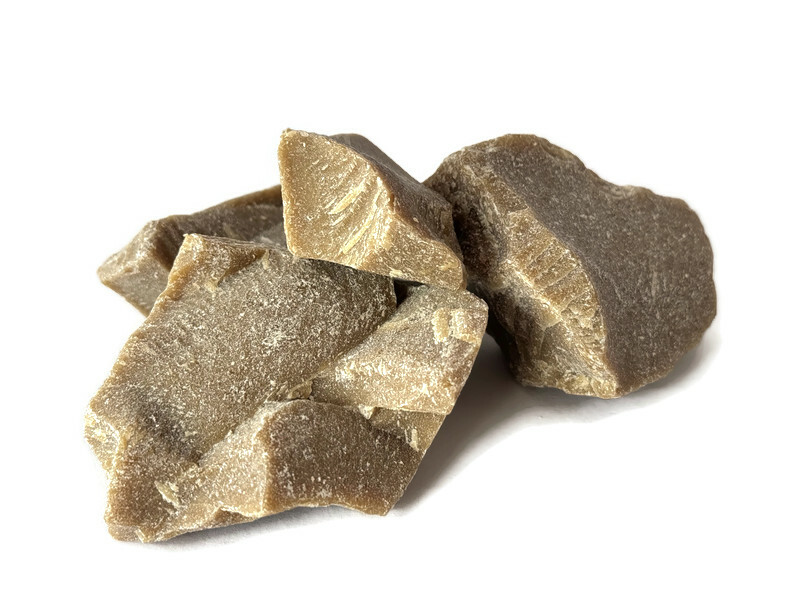
Shellac Wax – Bleached Premium Wax Our high-quality, bleached shellac wax is a natural product obtained through the purification and processing of shellac. It is ideal as a release agent, polishing agent, and protective coating for various industrial applications. Thanks to its unique properties, it is used in the cosmetic, pharmaceutical, and food industries. It is one of the hardest waxes after carnauba wax. Properties & Benefits: 100% natural and biodegradable Excellent water- and grease-repellent effect High melting point (70 – 86°C) for versatile applications Ideal coating agent Optimal solution for high-quality polishes and sealants Applications: Food industry: Gloss coating for fruits, confectionery, and coffee beans Pharmaceutical industry: Gastric-resistant coating for tablets Cosmetics: Ingredient in creams, lipsticks, and hairsprays Wood & furniture care: Natural polishing wax for fine wood surfaces Technical Specifications: Parameter Specification Ester number (mg/g) 30 – 70 Acid number (mg/g) 2 – 15 Saponification number (mg/g) 35 – 85 Iodine number (g/100g) 0.1 – 3 Ash max 1.0% Moisture max 1.0% Specific gravity @ 20℃ 0.93 – 0.98 Melting point (℃) 70 – 86
Content: 0.1 Kilogramm (€45.00 / 1 Kilogramm)
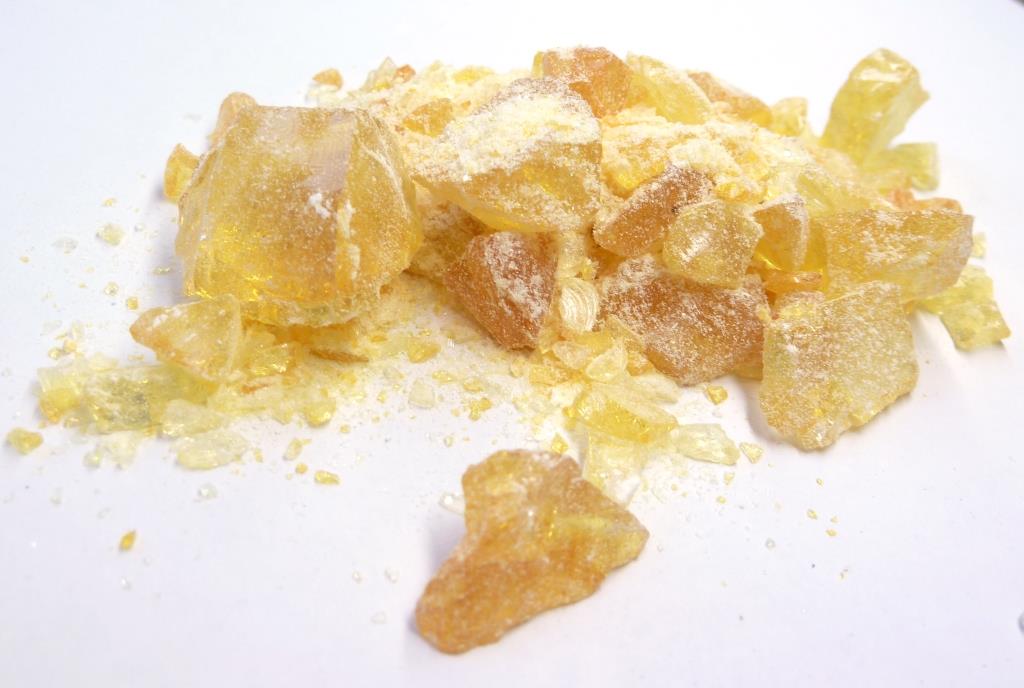
Unser Kolophonium ist von ausgesprochen hoher Güte. Es kann unter trockenen Bedingungen annähernd unbegrenzt gelagert werden und eignet sich auch für die Anwendung im Bereich der Instrumentenherstellung. Das Produkt wird in groben und feinen Stücken geliefert. Es können Anhaftungen von feinen Staub enthalten sein. ProduktdatenCAS-Nr.: 8050-09-7 alkohollöslich: ja wassserlöslich: nein Bestimmter Schmelzpunkt (chargenabhängig): 70-75°C Gardner Farbzahl: 4-6 Bestimmter Wert nach ASTM D-509: "X-4a" Basischer Anteil: 155-165 [mgKHO/g] Anwendungsbeispiele: - Laborchemikalie - Flussmittel (Löten) - Bogenharz, Geigenharz o.ä. - Bindemittel - uvm.
Content: 0.05 Kilogramm (€59.60 / 1 Kilogramm)
CAS No.: 9003-36-5 Sieve residue on 45µm: 90% Flow distance at 125°C: 34 mmMelting point: 84 °CFree phenol: 0.37 %Free water: 0.70 % Signal word: WARNING! Hazard Statements H 315 Causes skin irritation H 317 May cause an allergic skin reaction H 319 Causes serious eye irritation H 411 Toxic to aquatic life with long-lasting effects Precautionary Statements P501 Dispose of contents/container to an authorized waste disposal facility or municipal collection point P302+P352 IF ON SKIN: Wash with plenty of water and soap P332+P313 If skin irritation occurs: Get medical advice/attention P337+P313 If eye irritation persists: Get medical advice/attention P305+P351+P338 IF IN EYES: Rinse cautiously with water for several minutes. Remove contact lenses if present and easy to do. Continue rinsing.