
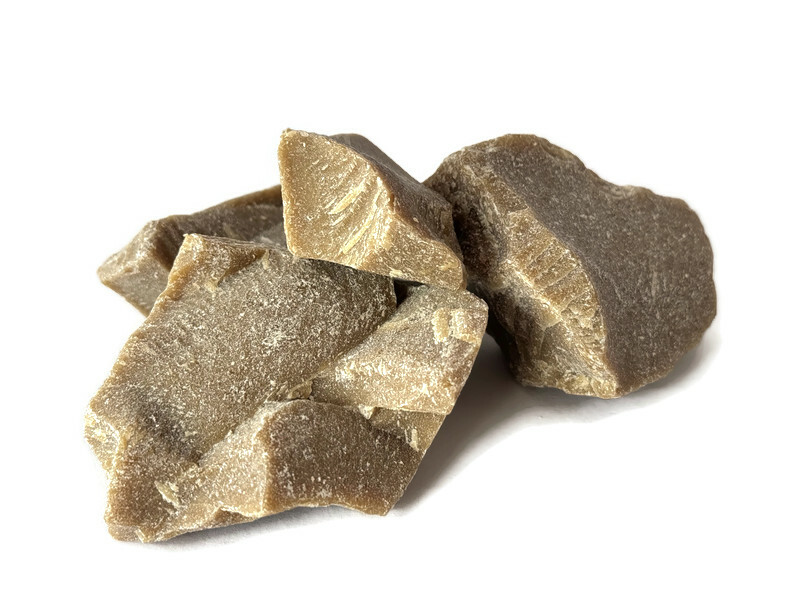
Shellac wax, purified and bleached, lac wax, shellac cera
€4.50
% Regular price: €5.90 (23.73% saved) previously €5.90
Available, delivery time: 2-5 days
Product information "Shellac wax, purified and bleached, lac wax, shellac cera"
Shellac Wax – Bleached Premium Wax
Our high-quality, bleached shellac wax is a natural product obtained through the purification and processing of shellac. It is ideal as a release agent, polishing agent, and protective coating for various industrial applications. Thanks to its unique properties, it is used in the cosmetic, pharmaceutical, and food industries. It is one of the hardest waxes after carnauba wax.
Properties & Benefits:
- 100% natural and biodegradable
- Excellent water- and grease-repellent effect
- High melting point (70 – 86°C) for versatile applications
- Ideal coating agent
- Optimal solution for high-quality polishes and sealants
Applications:
- Food industry: Gloss coating for fruits, confectionery, and coffee beans
- Pharmaceutical industry: Gastric-resistant coating for tablets
- Cosmetics: Ingredient in creams, lipsticks, and hairsprays
- Wood & furniture care: Natural polishing wax for fine wood surfaces
Technical Specifications:
| Parameter | Specification | |
|---|---|---|
| Ester number (mg/g) | 30 – 70 | |
| Acid number (mg/g) | 2 – 15 | |
| Saponification number (mg/g) | 35 – 85 | |
| Iodine number (g/100g) | 0.1 – 3 | |
| Ash | max 1.0% | |
| Moisture | max 1.0% | |
| Specific gravity @ 20℃ | 0.93 – 0.98 | |
| Melting point (℃) | 70 – 86 |
| Acid number: | 2 - 15 mg/g |
|---|---|
| Also known as: | Shellac-Wachs, Lackwachs, Bleached Shellac Wax, Dewaxed Shellac, Shellac Wax, Cera Lacca, Lac Wax, Laccifer-Wachs, Gummi Lacca, Lacca Cera, Lacca Sinica, Cire de Shellac, Cera de Goma Laca, Cera di Gommalacca, Schellackwachs, シェラックワックス, Hartwachs |
| Ash: | max. 1,0 % |
| CAS-Nr.: | 97766-50-2 |
| Feuchtigkeit: | max. 1,0 % |
| Iodine number: | 0,1 - 3 g / 100g |
| Produktcharakter: | grobe Stücke |
| Saponification Number: | 35 - 85 mg/g |
| Stoffgruppe: | Wachse / Ester |
| melting range: | 70 - 86 °C |
Login
Passend dazu
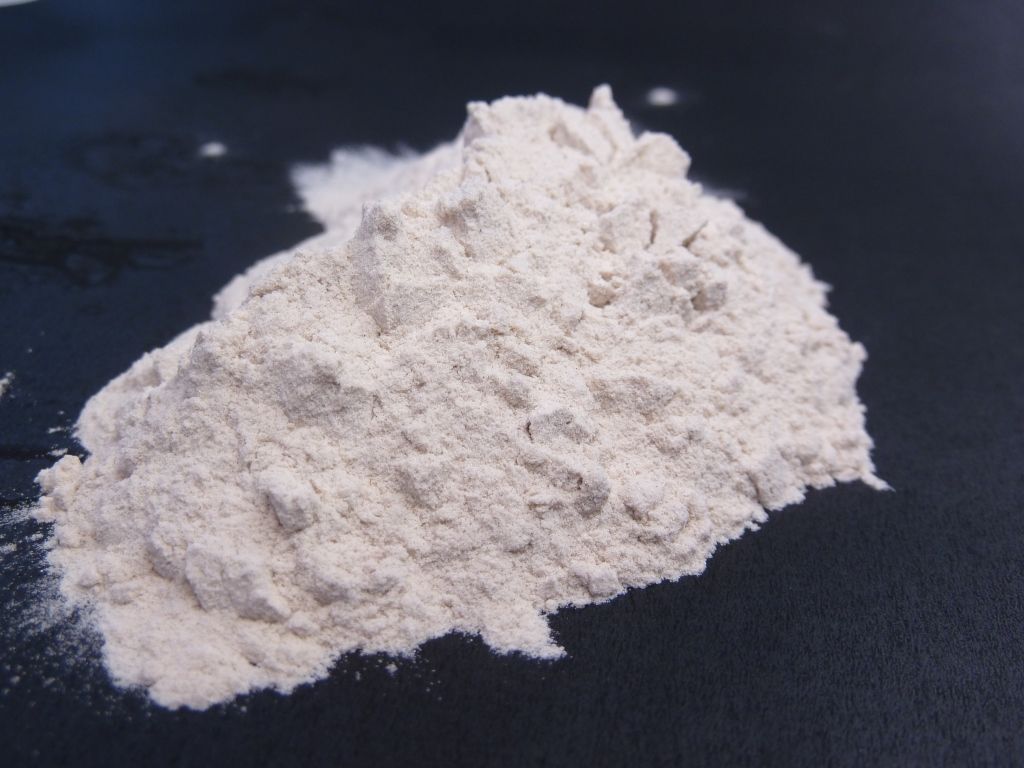
Gummi Arabicum ist ein Naturprodukt mit sehr vielen nützlichen Eigenschaften. Es weist nur sehr geringe Aschewerte auf und ist eines der ältesten bekannten Bindemittel und besitzt bereits eine Erwähnung in der Bibel. Ob in der Kosmetik, in Lebensmitteln, der Gummiverarbeitung - überall findet es noch heute mannigfaltige Anwendungen. Das Produkt ist staubfein vermahlen und weist eine leichte rosa Färbung auf. Es wird von Akazienbäumen gewonnen.ProduktdatenCAS-Nr.: 9000-01-5 alkohollöslich: neinwassserlöslich: ja Trocknungsverlust: 8,3 % (im Auslieferungszustand)Asche (C): 2,9 % Granulometrie: [d90 100µm]; [d50 63µm]; [d10 10µm]
Content: 25 Kilogramm (€11.33 / 1 Kilogramm)

Reines Polyvinylbutyral PVB B 60T Siebdurchgang des Pulvers (100% kleiner 250µm)freifließend Sehr effizient, da Sie nur wenig Lösungsmittel (Ethanol, Ether etc.) benötigen Glasübergangstemperatur: 72,0°CSchüttdichte: 270g/dm³Polyvinylalkohol: 26,3% CAS-Nr. .: 68648-78-2 Polyvinylacetat: 1,5% Viskosität nach Höppler: 213,4 mPa/s^-1 (in 10%ig in Ethanol) Polyvinylbutyral (PVB) ist ein thermoplastisches Polymer, das aufgrund seiner einzigartigen Eigenschaften in verschiedenen Anwendungen eingesetzt wird. Es wird aus Polyvinylalkohol (PVA) durch Reaktion mit Butyraldehyd hergestellt. Der resultierende Kunststoff weist eine hohe Transparenz, Flexibilität und Haftfestigkeit auf. Eine der bekanntesten Anwendungen von PVB ist die Verwendung als Zwischenschichtmaterial in Verbundglas. PVB wird zwischen zwei oder mehreren Glasscheiben laminiert, um eine starke Bindung zwischen den Scheiben zu gewährleisten. Dies führt zu Sicherheitsglas, das bei Bruch zusammenhält, anstatt in scharfe Splitter zu zerbrechen. Diese Eigenschaft macht PVB zu einer bevorzugten Wahl für die Herstellung von Autoglas und Sicherheitsverglasungen in Gebäuden. Ein weiterer Bereich, in dem PVB eingesetzt wird, ist die Herstellung von Folien und Beschichtungen. Die Flexibilität und Haftfestigkeit von PVB machen es zu einem idealen Material für die Herstellung von Folien für die Verpackungsindustrie. Es wird auch als Beschichtungsmaterial verwendet, um Oberflächen vor Feuchtigkeit, UV-Strahlung und anderen Umwelteinflüssen zu schützen. Darüber hinaus findet PVB Anwendung in der Druckfarbenindustrie. Es wird als Bindemittel für Tinten verwendet, um eine gute Haftung auf verschiedenen Oberflächen zu gewährleisten. PVB-Tinten sind besonders haltbar und abriebfest, wodurch sie für den Druck auf Verpackungsmaterialien und Etiketten geeignet sind. PVB hat auch seine Verwendung in der Herstellung von Folien für Solar- und Photovoltaikmodule gefunden. Die Transparenz und Widerstandsfähigkeit gegenüber Witterungseinflüssen machen PVB zu einem geeigneten Material für den Schutz von Solarmodulen vor Feuchtigkeit und anderen Umwelteinflüssen.
Content: 0.25 Kilogramm (€45.24 / 1 Kilogramm)
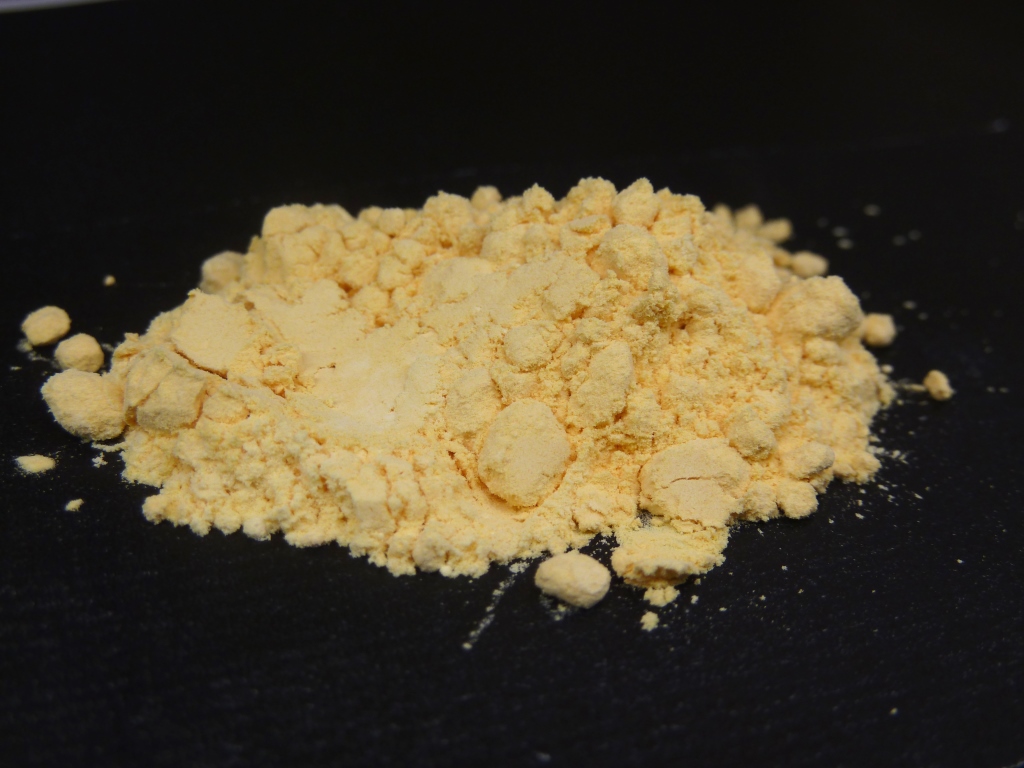
Dieses Dextrin (canary dextrine) wird aus Maisstärke gewonnen. Dabei wird die Stärke unter erhöhter Temperatur und Druck mit Wasserdampf oder katalytisch wirkender Säure versetzt. Hierbei wandelt sich die sonst unlösliche Stärke in ein wasserlösliches Produkt, welches hauptsächlich als Bindemittel Anwendung findet. Ein häufig bekannter Einsatz ist die Nassklebe-Beschichtung (auch Gummierung genannt) von Briefmarken und Kraftpapierbändern. Jedoch dient es ebenfalls als Lebensmittelzusatzstoff oder auch als Bindemittel in Pharmazeutika. Das Material ist sehr gut wasserlöslich und bindet bereits bei geringen Feuchtigkeitswerten. Mittlerweile befinden sich bereits viele Dextrin-basierte Künstlerfarben auf dem Markt (Mischung aus Dextrin und Pigment, sowie Wasser). ProduktdatenCAS-Nr.: 9004-53-9 Mittlere Teilchengröße: 17,50 µmFeuchtigkeit: max. 10 % [MCL 002B]pH-Wert: 2,5 - 4,0 [20 % Lösung]RVA-Viskosität: 960-2040 mPa*s [MCL 106T]Unlösliche Bestandteile: max. 2 % [MCL 340A]Reduzierter Zucker: max. 4,2 % [MCL 050A]Schüttdichte: ca. 0,55 kg/dm³ [MCL 095A]
Content: 0.1 Kilogramm (€23.80 / 1 Kilogramm)

White dextrin is a modified starch derivative obtained through a controlled, particularly gentle degradation process of starch. In contrast to yellow dextrin, it is produced at lower temperatures and with shorter reaction times. The result: a light white to slightly cream-colored powder with a low degree of degradation, longer molecular chains, and a neutral odor and taste profile. This gentle processing method makes white dextrin one of the most versatile plant-based binders available. It combines high binding strength with pronounced film formation and significantly higher solution viscosity compared to more degraded dextrins. Where an adhesive requires stability and adhesion, where a coating needs to apply evenly, or where a carrier substance must remain neutral in taste, white dextrin is the proven choice. Your benefits at a glance High binding strength – reliable adhesion on paper, cardboard, textiles, and mineral substrates Excellent film formation – smooth, uniform, and flexible films High solution viscosity – ideal for stable pastes and coatings Neutral in color, odor, and taste – no undesirable influence on the final product Low hygroscopicity – good storage stability, minimal tendency to clump Very low acid number – minimal corrosion tendency in equipment, high product stability Plant-based raw material – renewable and biodegradable Technical specifications Parameter Value Dry matter content min. 97.0% Acidity approx. 0.1 mL NaOH/100 g Solubility at 18.5 °C 55 – 75 Brookfield viscosity 16 – 90 mPa·s Appearance fine white to slightly cream-colored powder Base Potato starch The exceptionally low acidity of approximately 0.1 mL NaOH/100 g demonstrates careful process control with complete neutralization. Free acid residues that could lead to discoloration, odor formation, taste impairment, or corrosion in processing equipment are virtually absent. Application areas Adhesive industry Envelope and label adhesives, corrugated cardboard and tube adhesives, paper sack sealing. The high viscosity and controlled, slower dissolution ensure stable adhesives with clean application properties. Paper and cardboard processing Surface sizing, coating colors, and coatings. The light natural color preserves the paper's whiteness. Textile industry Sizing agents for yarns and fabrics to improve weavability and reduce thread breakage. Construction chemistry and foundry Additive in mortar and gypsum systems as well as binder component in molding materials. Food and pharmaceutical applications Binding, thickening, and filling agents, as well as tablet binders and carriers. Neutral taste, light color, and very low acidity are crucial quality features in these applications. Please note: Suitability for food or pharmaceutical applications must be verified based on the respective valid batch specification and applicable legal requirements. Processing instructions Due to its longer molecular chains and higher residual crystallinity, white dextrin has lower solubility in cold water compared to yellow dextrin. For complete, lump-free dissolution, the following is recommended: Slowly sprinkle the powder into cold water while stirring (do not do the reverse) Heat the mixture to 50 – 70 °C and continue stirring until the solution is clear and uniform Alternatively, allow for longer soaking and soaking times After cooling, the viscosity increases – adjust the solids content accordingly to achieve the target viscosity Storage Store in a dry, cool place, protected from moisture, in tightly sealed containers. Frequently asked questions What is the difference between white and yellow dextrin? White dextrin is produced at lower temperatures and with shorter reaction times. This results in longer molecular chains, a lighter color, neutral taste, and higher solution viscosity. Yellow dextrin ("British Gum") is more extensively degraded, has a yellow to brown color, and dissolves more quickly in cold water – but with significantly lower solution viscosity. Why does white dextrin not dissolve completely in cold water? Due to the gentle degradation process, longer molecular chains and a higher proportion of partially crystalline structure remain. Additionally, fewer hydrophilic end groups are formed. Heating to 50 – 70 °C reliably dissolves the product. Is white dextrin the same as starch? No. Starch is the raw material. White dextrin is derived from it through targeted thermal or hydrolytic degradation, resulting in fundamentally different solubility, viscosity, and binding properties. What does the low acid value of 0.1 mL NaOH/100 g mean? The value indicates that virtually no free acid residues remain in the product. This means high stability, neutral taste, no tendency to discoloration, and no risk of corrosion to your equipment. What is white dextrin most commonly used for? The largest application area is adhesives based on paper and cardboard. It is also established in paper coating, textile sizing, construction chemistry, and as a binding and filling agent in food and pharmaceutical products. How can I achieve a lump-free solution? Always sprinkle the powder into cold water and then heat it. If the powder is added to already hot water, the surface of the particles will gelatinize and trap dry material inside. Is the product biodegradable? Yes. White dextrin is entirely based on plant-based starch and is biodegradable. What are the technical specifications of this white dextrin? The dry matter content is at least 97.0%. The acidity is approximately 0.1 mL NaOH/100 g. The solubility at 18.5 °C is in the range of 55 – 75. The Brookfield viscosity is 16 – 90 mPa·s. How should white dextrin be stored? Store in a dry, cool place, protected from moisture, in tightly sealed containers. Due to its low hygroscopicity, storage stability is good, and the tendency to clump is low. Is white dextrin suitable for food or pharmaceutical applications? White dextrin is used in these areas as a binding, thickening, and filling agent, as well as a tablet binder and carrier. However, its suitability must always be verified based on the valid batch specification and applicable legal requirements. The product on this page is of technical quality.
Content: 0.1 Kilogramm (€23.80 / 1 Kilogramm)
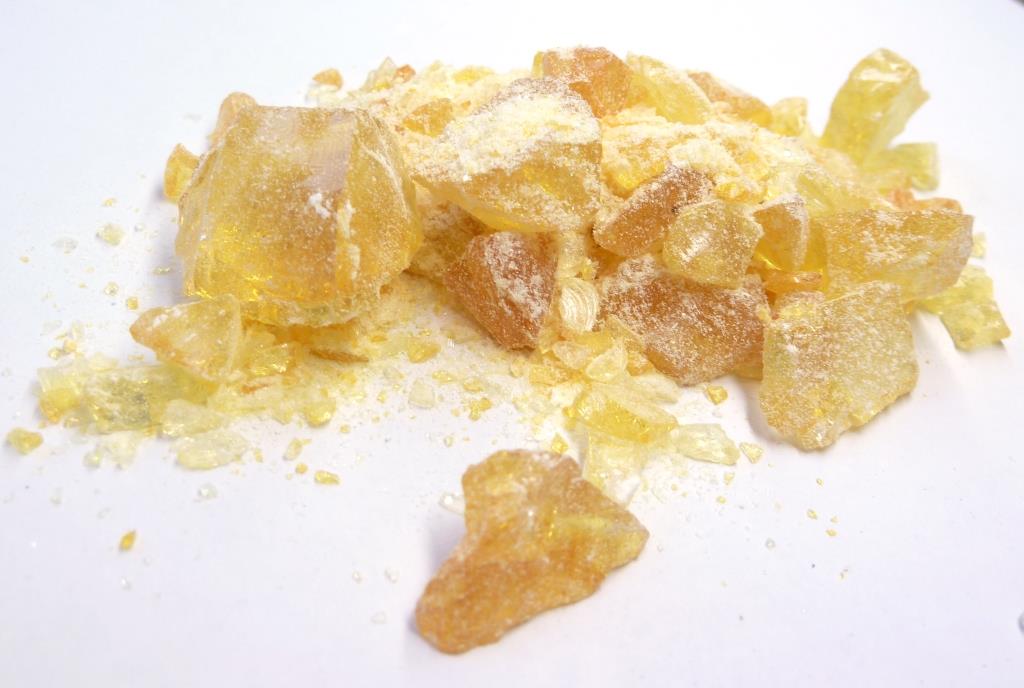
Unser Kolophonium ist von ausgesprochen hoher Güte. Es kann unter trockenen Bedingungen annähernd unbegrenzt gelagert werden und eignet sich auch für die Anwendung im Bereich der Instrumentenherstellung. Das Produkt wird in groben und feinen Stücken geliefert. Es können Anhaftungen von feinen Staub enthalten sein. ProduktdatenCAS-Nr.: 8050-09-7 alkohollöslich: ja wassserlöslich: nein Bestimmter Schmelzpunkt (chargenabhängig): 70-75°C Gardner Farbzahl: 4-6 Bestimmter Wert nach ASTM D-509: "X-4a" Basischer Anteil: 155-165 [mgKHO/g] Anwendungsbeispiele: - Laborchemikalie - Flussmittel (Löten) - Bogenharz, Geigenharz o.ä. - Bindemittel - uvm.
Content: 0.5 Kilogramm (€21.42 / 1 Kilogramm)

Calciumsulfat-Dihydrat (CAS-Nummer: 10101-41-4) ist eine Verbindung aus Calcium, Schwefel und Sauerstoff, die auch als Gips bezeichnet wird. Die chemische Formel lautet CaSO4 * 2H2O. Formel: CaSO4*2H2O CAS-Nr.: 10101-41-4 Reinheit: min. 99,10 % CaO: 37,60 % SO3-: 53,7 % CO2: 0,8 % Weißgrad: 89 Partikelgrößenverteilung Siebdurchgang /Ergebnis 63µm-Sieb > 99,0 % 50µm-Sieb > 92,0 % 40µm-Sieb > 87,0 % 20µm-Sieb > 70,0 %
Content: 0.1 Kilogramm (€20.20 / 1 Kilogramm)