
min. 99.1% titanium(IV) oxide, TiO2, fine powder, anatase, white, CAS No.: 1317-70-0
€10.12
Available, delivery time: 2-5 days
Product information "min. 99.1% titanium(IV) oxide, TiO2, fine powder, anatase, white, CAS No.: 1317-70-0"
Titanium dioxide(TiO2) is a widely used material that finds application in various industries. One of the modifications of titanium dioxide is theAnatase-Modification. The anatase modification is characterized by its unique crystal structure and outstanding properties.
TheAnatase modification of titanium dioxidehas a tetragonal crystal structure. The atoms are arranged in a specific arrangement that ensures high stability. The crystal structure of the anatase modification allows titanium dioxide to exhibit a variety of properties that make it attractive for various applications.
Characteristics
- High chemical stability
- Good photocatalysis properties
- Low electrical resistance
- High light absorption
- Large surface area
Applications
TheAnatase-Modification ofTitanium dioxideis used in various applications including:
- Sunscreens: Due to its high light absorption properties, titanium dioxide in the anatase modification is used as a UV filter in sunscreens.
- Photocatalysis: Due to its good photocatalysis properties, anatase titanium dioxide is used in environmental technology to break down pollutants.
- Dye-sensitized solar cells: Anatase modification is used in the production of dye-sensitized solar cells because it enables efficient conversion of sunlight into electrical energy.
Titanium dioxide specifications
TiO2: at least 99.11%
Chemical specification
| element | Salary |
|---|---|
| S | 0,023% |
| Fe2O3 | 0,014% |
| Nb2O3 | 0,052% |
Whiteness: 87.6%
Granulometry
| Size | particle size |
|---|---|
| d90 | 9.8µm |
| d50 | 6.0µm |
| d10 | 1.5µm |
| Also known as: | Titan(IV)-oxid, Titandioxid, Rutil, Anatas, Brookit, E 171, C.I. Pigment White 6, C.I. 77891, CI 77891, TITANIUM DIOXIDE |
|---|---|
| CAS-Nr.: | 1317-70-0 |
| Color: | Weiß |
| Fe2O3: | 0,014 % |
| Modifikation: | Anatas |
| Nd2O3: | 0,052 % |
| Produktcharakter: | feines Pulver |
| Schwefel: | 0,023 % |
| Stoffgruppe: | Oxide |
| Weißgrad: | min. 87,6 % |
| kind of product: | chemical |
| material: | Titanoxid |
| nominal particle size: | d50 6,0µm |
| purity: | min. 99,1 % |
| zur GPSR-Informationspflicht: | Hersteller + Verantwortliche Person: Werth-Metall, Ringstr. 41b, 99428 Grammetal, info@werth-metall.de |
Login
Passend dazu:

White dextrin is a modified starch derivative obtained through a controlled, particularly gentle degradation process of starch. In contrast to yellow dextrin, it is produced at lower temperatures and with shorter reaction times. The result: a light white to slightly cream-colored powder with a low degree of degradation, longer molecular chains, and a neutral odor and taste profile. This gentle processing method makes white dextrin one of the most versatile plant-based binders available. It combines high binding strength with pronounced film formation and significantly higher solution viscosity compared to more degraded dextrins. Where an adhesive requires stability and adhesion, where a coating needs to apply evenly, or where a carrier substance must remain neutral in taste, white dextrin is the proven choice. Your benefits at a glance High binding strength – reliable adhesion on paper, cardboard, textiles, and mineral substrates Excellent film formation – smooth, uniform, and flexible films High solution viscosity – ideal for stable pastes and coatings Neutral in color, odor, and taste – no undesirable influence on the final product Low hygroscopicity – good storage stability, minimal tendency to clump Very low acid number – minimal corrosion tendency in equipment, high product stability Plant-based raw material – renewable and biodegradable Technical specifications Parameter Value Dry matter content min. 97.0% Acidity approx. 0.1 mL NaOH/100 g Solubility at 18.5 °C 55 – 75 Brookfield viscosity 16 – 90 mPa·s Appearance fine white to slightly cream-colored powder Base Potato starch The exceptionally low acidity of approximately 0.1 mL NaOH/100 g demonstrates careful process control with complete neutralization. Free acid residues that could lead to discoloration, odor formation, taste impairment, or corrosion in processing equipment are virtually absent. Application areas Adhesive industry Envelope and label adhesives, corrugated cardboard and tube adhesives, paper sack sealing. The high viscosity and controlled, slower dissolution ensure stable adhesives with clean application properties. Paper and cardboard processing Surface sizing, coating colors, and coatings. The light natural color preserves the paper's whiteness. Textile industry Sizing agents for yarns and fabrics to improve weavability and reduce thread breakage. Construction chemistry and foundry Additive in mortar and gypsum systems as well as binder component in molding materials. Food and pharmaceutical applications Binding, thickening, and filling agents, as well as tablet binders and carriers. Neutral taste, light color, and very low acidity are crucial quality features in these applications. Please note: Suitability for food or pharmaceutical applications must be verified based on the respective valid batch specification and applicable legal requirements. Processing instructions Due to its longer molecular chains and higher residual crystallinity, white dextrin has lower solubility in cold water compared to yellow dextrin. For complete, lump-free dissolution, the following is recommended: Slowly sprinkle the powder into cold water while stirring (do not do the reverse) Heat the mixture to 50 – 70 °C and continue stirring until the solution is clear and uniform Alternatively, allow for longer soaking and soaking times After cooling, the viscosity increases – adjust the solids content accordingly to achieve the target viscosity Storage Store in a dry, cool place, protected from moisture, in tightly sealed containers. Frequently asked questions What is the difference between white and yellow dextrin? White dextrin is produced at lower temperatures and with shorter reaction times. This results in longer molecular chains, a lighter color, neutral taste, and higher solution viscosity. Yellow dextrin ("British Gum") is more extensively degraded, has a yellow to brown color, and dissolves more quickly in cold water – but with significantly lower solution viscosity. Why does white dextrin not dissolve completely in cold water? Due to the gentle degradation process, longer molecular chains and a higher proportion of partially crystalline structure remain. Additionally, fewer hydrophilic end groups are formed. Heating to 50 – 70 °C reliably dissolves the product. Is white dextrin the same as starch? No. Starch is the raw material. White dextrin is derived from it through targeted thermal or hydrolytic degradation, resulting in fundamentally different solubility, viscosity, and binding properties. What does the low acid value of 0.1 mL NaOH/100 g mean? The value indicates that virtually no free acid residues remain in the product. This means high stability, neutral taste, no tendency to discoloration, and no risk of corrosion to your equipment. What is white dextrin most commonly used for? The largest application area is adhesives based on paper and cardboard. It is also established in paper coating, textile sizing, construction chemistry, and as a binding and filling agent in food and pharmaceutical products. How can I achieve a lump-free solution? Always sprinkle the powder into cold water and then heat it. If the powder is added to already hot water, the surface of the particles will gelatinize and trap dry material inside. Is the product biodegradable? Yes. White dextrin is entirely based on plant-based starch and is biodegradable. What are the technical specifications of this white dextrin? The dry matter content is at least 97.0%. The acidity is approximately 0.1 mL NaOH/100 g. The solubility at 18.5 °C is in the range of 55 – 75. The Brookfield viscosity is 16 – 90 mPa·s. How should white dextrin be stored? Store in a dry, cool place, protected from moisture, in tightly sealed containers. Due to its low hygroscopicity, storage stability is good, and the tendency to clump is low. Is white dextrin suitable for food or pharmaceutical applications? White dextrin is used in these areas as a binding, thickening, and filling agent, as well as a tablet binder and carrier. However, its suitability must always be verified based on the valid batch specification and applicable legal requirements. The product on this page is of technical quality.

Pure polyvinyl butyral PVB B 60HSieve pass of the powder (100% less than 250µm)free flowing Very efficient because you only need a small amount of solvent (ethanol, ether, etc.). Bulk density: 250 g/dm³Polyvinyl alcohol: 18.3% CAS no. .: 68648-78-2 Polyvinyl acetate: 1.7% Viscosity according to Höppler: 177.5 mPa/s^-1 (in 10% in ethanol) Polyvinyl butyral(PVB) is athermoplastic polymer, which is used in various applications due to its unique properties. It's overPolyvinyl alcohol(PVA) by reacting withButyraldehydemanufactured. The resultingplastichas onehigh transparency, flexibility and adhesive strengthon. One of the most famous applications ofPVBis the use asInterlayer material in laminated glass. PVBis laminated between two or more sheets of glass to create astrong bond between the slicesto ensure. This leads toSafety glass, which holds together when broken instead of breaking into sharp splinters. This property makes PVB a preferred choice for manufacturingAuto glass and safety glazingin buildings. Another area in whichPVBis used is theProduction of films and coatings. The flexibility and adhesion ofPVBmake it an ideal material for producing films for the packaging industry. It is also used as a coating material toTo protect surfaces from moisture, UV radiation and other environmental influences. Furthermore findsPVBApplication in theprinting ink industry. It will be asbinderused for inks to ensure good adhesion to various surfaces. PVB inks are particularly durable and abrasion-resistant, making them suitable for printing on packaging materials and labels. PVB also has its uses in the production of films forSolar and photovoltaic modules found. The transparency and resistance to weather influences make PVB a suitable material for protecting solar modules from moisture and other environmental influences.
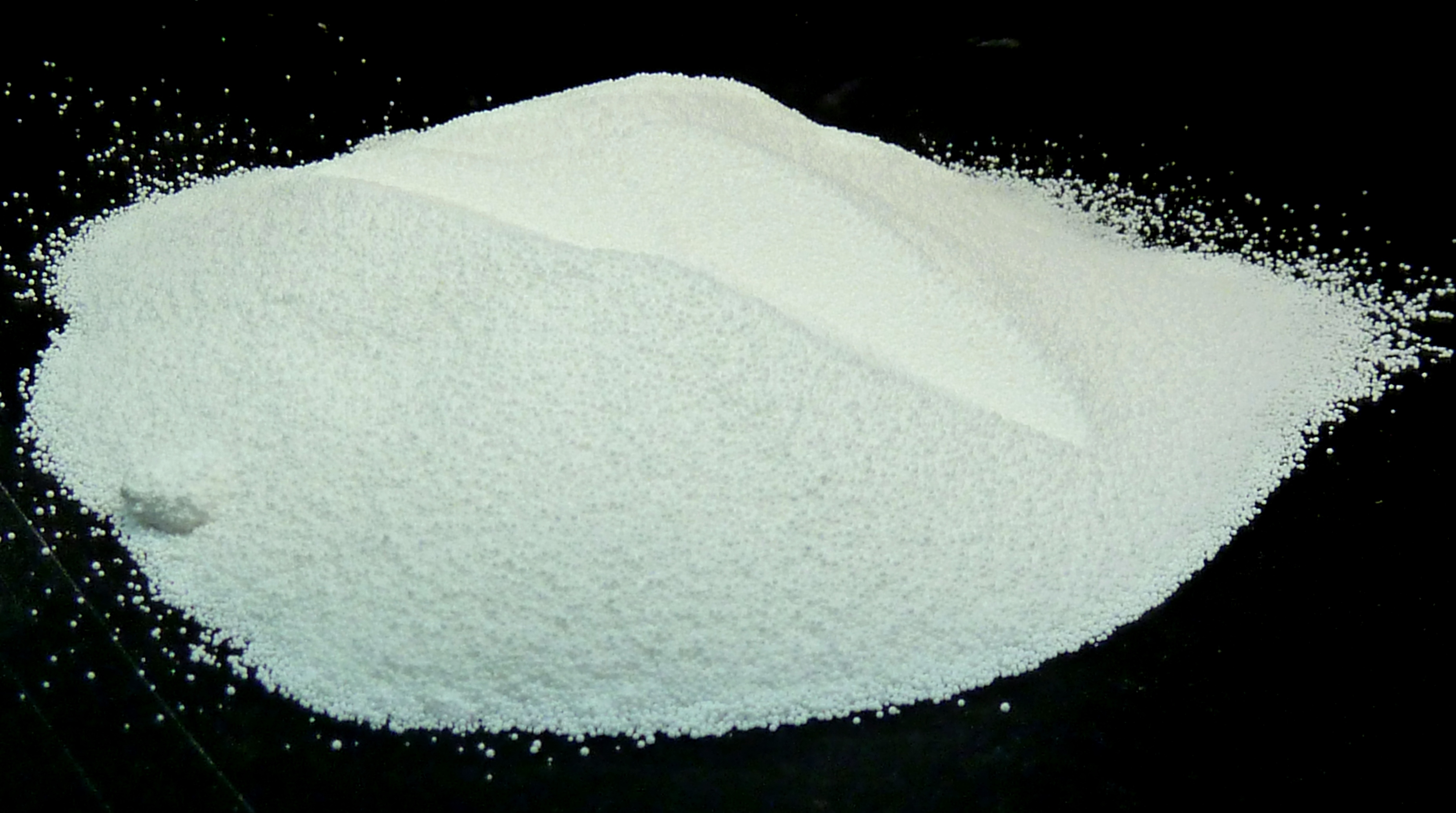
- DENSITY DIN 53 479: 1.5 g/cm³ - APPEARANCE: white powder - TURBIDITY 18.5% IN TOLUENE: max. 2 - ASH: max. 0.3% - CHLORINE CONTENT: 64.5 to 67% - MOISTURE (DIN 51 777): max. 0.3% - TOLUENE: <2.5% - CAS No.: 103170-23-6
Pure polyvinyl butyral PVB B 60T Sieve pass of the powder (100% less than 250µm)free flowing Very efficient because you only need a small amount of solvent (ethanol, ether, etc.). Glass transition temperature: 72.0°CBulk density: 270g/dm³Polyvinyl alcohol: 26.3% CAS no. .: 68648-78-2 Polyvinyl acetate: 1.5% Viscosity according to Höppler: 213.4 mPa/s^-1 (in 10% in ethanol) Polyvinyl butyral(PVB) is athermoplastic polymer, which is used in various applications due to its unique properties. It's overPolyvinyl alcohol(PVA) by reacting withButyraldehydemanufactured. The resultingplastichas onehigh transparency, flexibility and adhesive strengthon. One of the most famous applications ofPVBis the use asInterlayer material in laminated glass. PVBis laminated between two or more sheets of glass to create astrong bond between the slicesto ensure. This leads toSafety glass, which holds together when broken instead of breaking into sharp splinters. This property makes PVB a preferred choice for manufacturingAuto glass and safety glazingin buildings. Another area in whichPVBis used is theProduction of films and coatings. The flexibility and adhesion ofPVBmake it an ideal material for producing films for the packaging industry. It is also used as a coating material toTo protect surfaces from moisture, UV radiation and other environmental influences. Furthermore findsPVBApplication in theprinting ink industry. It will be asbinderused for inks to ensure good adhesion to various surfaces. PVB inks are particularly durable and abrasion-resistant, making them suitable for printing on packaging materials and labels. PVB also has its uses in the production of films forSolar and photovoltaic modules found. The transparency and resistance to weather influences make PVB a suitable material for protecting solar modules from moisture and other environmental influences.
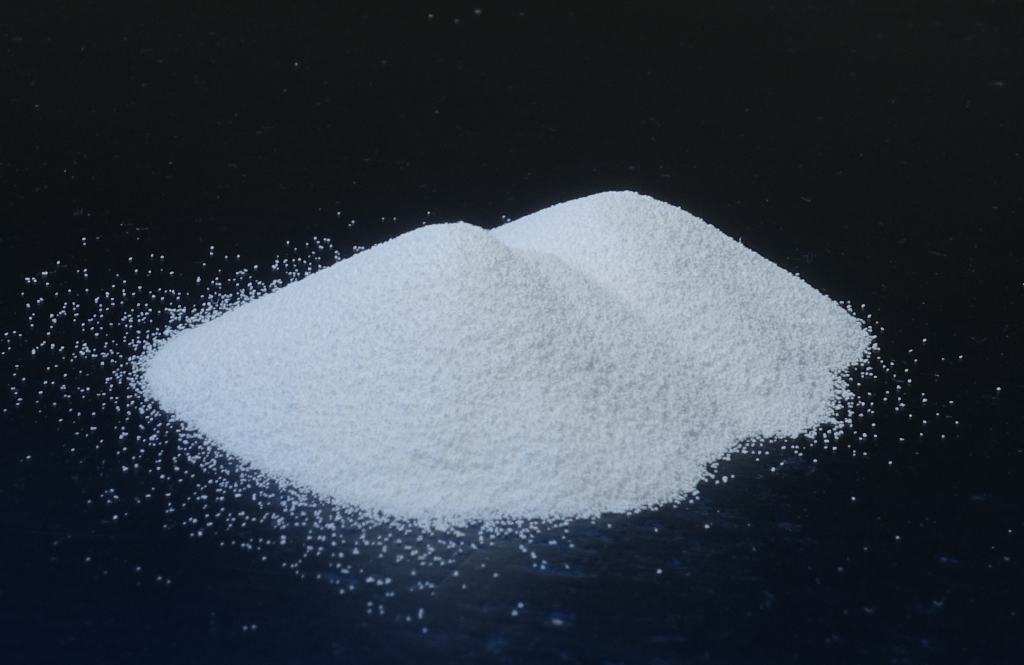
The one we deliverPVC powderis suitable for different applications. Among other things, it is used in: Filler in paints/varnisheschemical auxiliary substance (chlorine donor in thermal reactions)Thixotropy aids The powder is white, amorphous and odorless. Due to its low particle size, it has poor free-flow properties. APPEARANCE: white powder SUMMER FORMULA: C2H3ClCHLORINE CONTENT: 57%

Polytetrafluoroethylene(PTFE) is a highly interesting polymer that has a wide range of applications in various industries. This unique material is valued for its remarkable chemical and physical properties.PTFEis usuallyas an extremely fine powderand offers a wealth of advantages for numerous applications. PTFE is produced by polymerizing tetrafluoroethylene, a colorless and odorless gas. The resulting product is a white powder that has a very large surface area due to its tiny particle size. This enables oneexcellent adhesionon surfaces. One of the most notable properties of PTFE is itsexceptional chemical resistance. It is inert to most chemicals and solventsinsensitive to corrosion. This makes PTFE an ideal choice for applications that come into contact with aggressive substances, such as in the chemical industry or the storage of hazardous materials. Another notable aspect of PTFE is itsexcellent gliding ability. It has onevery low coefficients of friction, making it aslubricantCan be used in various applications (sprayableSolid lubricant/dry lubricants). Whether in plain bearings, seals or as a coating for machine components, PTFE reduces wear and enables smooth operation.Typical chemical and physical specifications:CAS No.: 9002-84-0Bulk density: approx. 300 g/dm³Average particle size (agglomerated): approx. 4 µmAverage particle size (primary particles): approx. 180 nanometersSpecific surface area: 12 m²/gMelting point: 330°C

The one we deliverGum Accroides (Red Gum)isfinely groundand of high quality. It iseasily soluble in alcohol, but very resistant to cellulose nitrate or acetate and is ideal as anatural binding agent. The material was additionally processed using wet steamcleaned, which ensures a higher degree of purity compared to mere air filtration. It has an aromatic, benzene-like smell, which is due to the benzoic acid contained in the product. Chemical/physical specifications: Accroides: > 88.00% CAS No.: 9000-20-8Density: 0.7-0.74 g/cm³Humidity: < 5.0%Water-soluble components: < 10% Total ash content: < 2.0% of which HCL-insoluble < 1.0%
The chlorinated one we supply PVC powderis suitable for different applications. Among other things, it is used in: Filler in paints/varnisheschemical auxiliary substance (chlorine donor in thermal reactions)Injection molded componentsThe powder is white, amorphous and odorless.
The one we deliverPVC powderis suitable for different applications. Among other things, it is used in: Filler in paints/varnisheschemical auxiliary substance (chlorine donor in thermal reactions)Thixotropy aids The powder is white, amorphous and odorless. Due to its low particle size, it has poor free-flow properties. APPEARANCE: white powder BULK DENSITY: 0.383 g/cm³SUMMER FORMULA: C2H3ClCHLORINE CONTENT: 57%NOMINAL PARTICLE SIZE: 13-17 µm
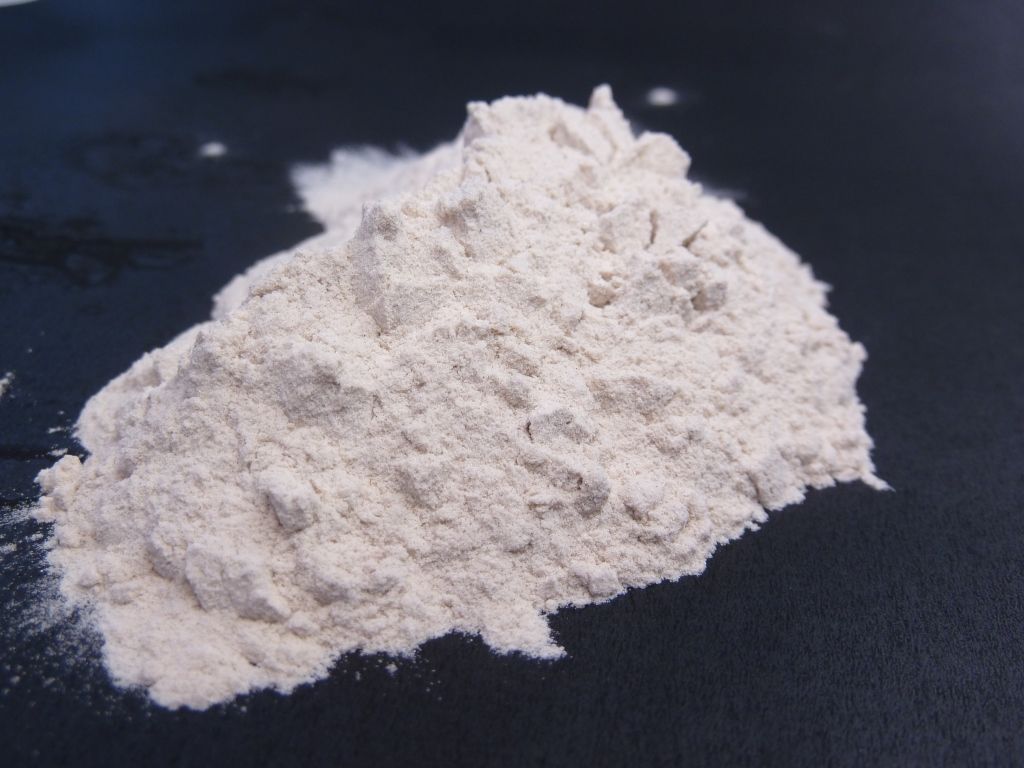
Gum Arabicis aNatural productwith many useful properties. It just shows a lotlow ash valuesand is one of the oldest known binding agents and is already mentioned in the Bible. Whether in cosmetics, food, rubber processing - it still has a variety of applications everywhere today. The product isground until fine as dustand has a slight pink color. It is obtained from acacia trees.Product dataCAS No.: 9000-01-5 alcohol soluble: nowater soluble: yes Drying loss: 8.3% (as delivered)Ash (C): 2.9% Granulometry: [d90 100µm]; [d50 63µm]; [d10 10µm]

Zirconium(IV) oxide, or Zirconium oxide for short, is indispensable for countless applications. Due to its great hardness, temperature and chemical resistance, it is a particularly wear-resistant material. In dental technology, implants, crowns and abrasives are the main components of zirconium dioxide with a narrow particle size distribution. It is a monoclinic, unstabilized variant with high chemical reactivity.
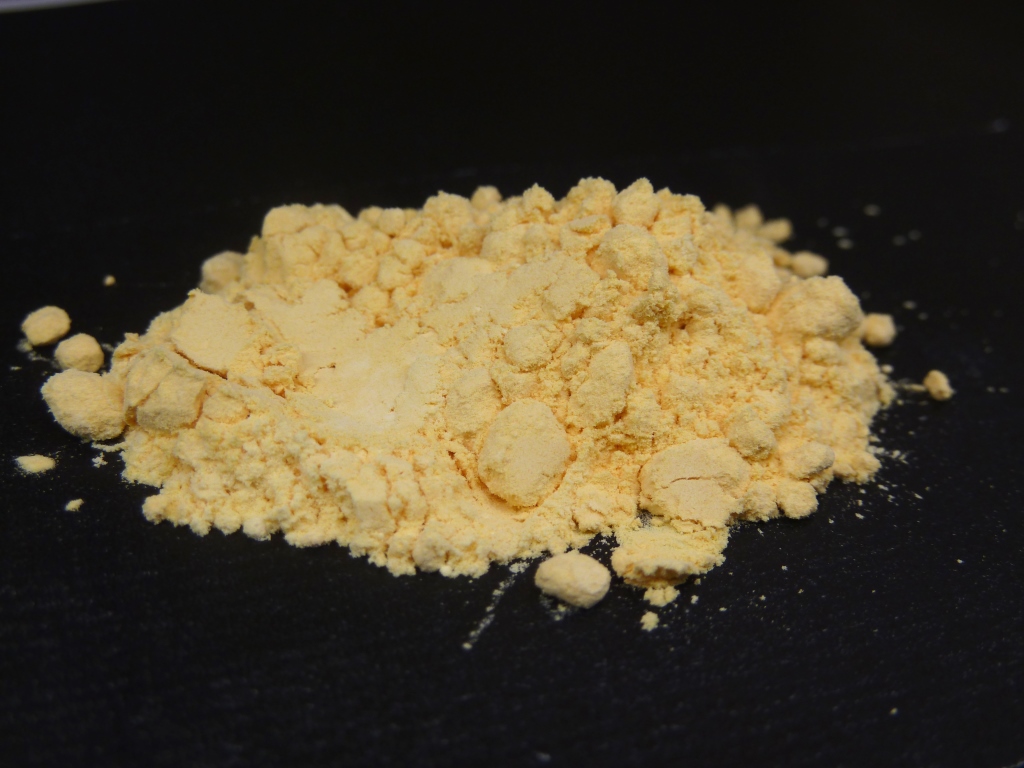
ThisDextrin (canary dextrin) will be outCornstarchwon. The starch is mixed with steam or catalytically active acid under increased temperature and pressure. This converts the otherwise insoluble starch into awater soluble product, which mainly asbinderapplies. A commonly known use is thisWet adhesive coating (also called gumming) of postage stamps and kraft paper tapes. However, it is also used as a food additive or as a binding agent in pharmaceuticals. The material isvery soluble in waterand binds even at low moisture levels. There are now many dextrin-based artists' colors on the market (mixture of dextrin and pigment, as well as water). Product dataCAS No.: 9004-53-9 Average particle size: 17.50 µmHumidity: max. 10% [MCL 002B]pH value: 2.5 - 4.0 [20% solution]RVA viscosity: 960-2040 mPa*s [MCL 106T]Insoluble components: max. 2% [MCL 340A]Reduced sugar: max. 4.2% [MCL 050A]Bulk density: approx. 0.55 kg/dm³ [MCL 095A]
Pure polyvinyl butyral PVB B 75HSieve pass of the powder (100% less than 250µm)free flowing Very efficient because you only need a small amount of solvent (ethanol, ether, etc.). Glass transition temperature: 73.0 °CBulk density: 200 g/dm³Polyvinyl alcohol: 20.5% CAS no. .: 68648-78-2 Polyvinyl acetate: 1.3% Viscosity according to Höppler: 79.5 mPa/s^-1 (in 10% in ethanol) Polyvinyl butyral(PVB) is athermoplastic polymer, which is used in various applications due to its unique properties. It's overPolyvinyl alcohol(PVA) by reacting withButyraldehydemanufactured. The resultingplastichas onehigh transparency, flexibility and adhesive strengthon. One of the most famous applications ofPVBis the use asInterlayer material in laminated glass. PVBis laminated between two or more sheets of glass to create astrong bond between the slicesto ensure. This leads toSafety glass, which holds together when broken instead of breaking into sharp splinters. This property makes PVB a preferred choice for manufacturingAuto glass and safety glazingin buildings. Another area in whichPVBis used is theProduction of films and coatings. The flexibility and adhesion ofPVBmake it an ideal material for producing films for the packaging industry. It is also used as a coating material toTo protect surfaces from moisture, UV radiation and other environmental influences. Furthermore findsPVBApplication in theprinting ink industry. It will be asbinderused for inks to ensure good adhesion to various surfaces. PVB inks are particularly durable and abrasion-resistant, making them suitable for printing on packaging materials and labels. PVB also has its uses in the production of films forSolar and photovoltaic modules found. The transparency and resistance to weather influences make PVB a suitable material for protecting solar modules from moisture and other environmental influences.
Pure polyvinyl butyral PVB B 30HSieve pass of the powder (100% less than 250µm)free flowing Very efficient because you only need a small amount of solvent (ethanol, ether, etc.). Bulk density: 320 g/dm³Polyvinyl alcohol: 18.9% CAS no. .: 68648-78-2 Polyvinyl acetate: 2.1% Viscosity according to Höppler: 52.9 mPa/s^-1 (in 10% in ethanol) Polyvinyl butyral(PVB) is athermoplastic polymer, which is used in various applications due to its unique properties. It's overPolyvinyl alcohol(PVA) by reacting withButyraldehydemanufactured. The resultingplastichas onehigh transparency, flexibility and adhesive strengthon. One of the most famous applications ofPVBis the use asInterlayer material in laminated glass. PVBis laminated between two or more sheets of glass to create astrong bond between the slicesto ensure. This leads toSafety glass, which holds together when broken instead of breaking into sharp splinters. This property makes PVB a preferred choice for manufacturingAuto glass and safety glazingin buildings. Another area in whichPVBis used is theProduction of films and coatings. The flexibility and adhesion ofPVBmake it an ideal material for producing films for the packaging industry. It is also used as a coating material toTo protect surfaces from moisture, UV radiation and other environmental influences. Furthermore findsPVBApplication in theprinting ink industry. It will be asbinderused for inks to ensure good adhesion to various surfaces. PVB inks are particularly durable and abrasion-resistant, making them suitable for printing on packaging materials and labels. PVB also has its uses in the production of films forSolar and photovoltaic modules found. The transparency and resistance to weather influences make PVB a suitable material for protecting solar modules from moisture and other environmental influences.
Pure polyvinylidene chloride - plastic powder, known under the trade names "IXAN" or "Saran" (registered trademarks) APPEARANCE: white powderBULK DENSITY: 0.9 kg/dm³AVERAGE PARTICLE SIZE: 200µmMELTING TEMPERATURE: 155°CMELTING VISCOSITY AT 160°C: 1500 Pa*sSPECIFIC WEIGHT: 1.71 kg/dmIdeal for use in: Chlorine supplier/binder in paint sets (pyrotechnics), inert layers against chemical effects (e.g. corrosion in plant engineering, process engineering) fiber processing/manufacture

Barium sulfate is an important material in various industries. It is often used as an X-ray contrast agent in medical imaging and also has applications in the oil and gas industry, where it is used in the production of drilling fluids and as filler is used in plastics and rubber. Barium sulfate is also widely used in the paper and paint industry, where it is used as a white pigment, active support of titanium dioxide and to increase the density of paints and varnishes. It is also very frequently used in veterinary medicine . It is important to note that barium sulfate is high density and is not soluble. Barium sulfate is the only barium salt that is not considered dangerous goods.This barium sulfate is extracted directly from the mineral. For this purpose it is purified, dried and ground several times. This means that the material has a very low and therefore machine-friendly quartz content (reduced wear) and high brightness. Chemical and physical properties Average particle size: approx. 1.3µm Top cut: approx. 4µm Sieve residue at 20µm: max. 0.05% BaSO4 content: approx. 98.0% Si content: approx. 0.3% Electrical conductivity: max. 100 µS/cm Brightness: approx. 90 Ry pH value: approx. 8 Density: approx. 4.4 g/cm³ Mohs Hardness: 3-4
Content: 0.1 Kilogramm (€17.90 / 1 Kilogramm)
Barium sulfate is an important material in various industries. It is often used as an X-ray contrast agent in medical imaging and also has applications in the oil and gas industry, where it is used in the production of drilling fluids and as filler is used in plastics and rubber. Barium sulfate is also widely used in the paper and paint industry, where it is used as a white pigment, active support of titanium dioxide and to increase the density of paints and varnishes. It is also very frequently used in veterinary medicine . It is important to note that barium sulfate is high density and is not soluble. Barium sulfate is the only barium salt that is not considered dangerous goods.This barium sulfate was chemically precipitated. This means that the material has a very low particle size down to the nano range, Quartz-free (reduced wear), high brightness and large Purity. Chemical and physical properties Average particle size: approx. 0.7µm Sieve residue at 45µm: max. 0.007% BaSO4 content: approx. 98.5% Water-soluble components: approx. 0.15% Chloride: max. 0.0009 Volatile components: max. 0.1% Electrical conductivity: max. 200 µS/cm Brightness: approx. 99% pH value: approx. 9 Density: approx. 4.4 g/cm³ Mohs Hardness: 3.5 Specific surface area: 3.0 m²/g Refractive index: 1.64 Gloss (ISO 2813): very high Oil number (ISO 787/5): 14 g/100g
Content: 5 Kilogramm (€12.14 / 1 Kilogramm)
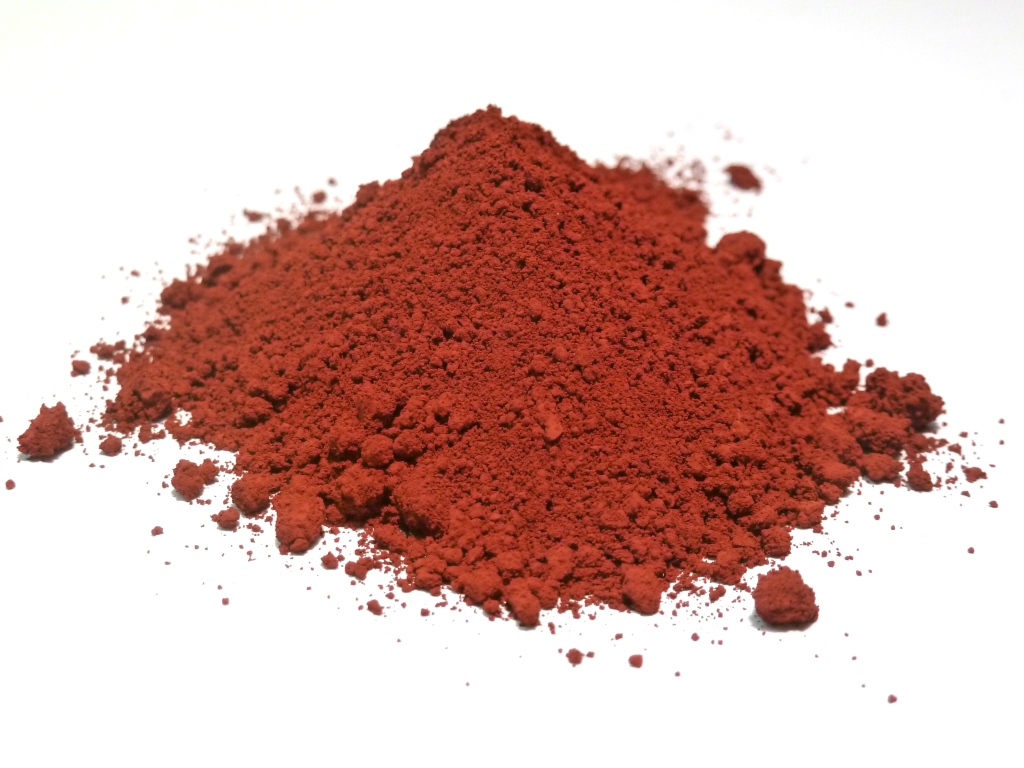
Thisred iron oxideis manufactured synthetically and shows next to onehigh purityoneextremely small primary particle size. Beintense vermilion redcan be ideally used in pigment and ceramic recipes.The use as a catalyst or generally as a chemical reagent is also ideal because of the small particle size.Fe2O3at least 97.50%Water-soluble componentsmax. 0.5%Sieve residue 45µmmax. 0.06%PH valueapprox. 4.5Oil numberapprox. 28g/100gdensityapprox. 5.2 g/cm³conductance500 µS/cm"
Content: 0.25 Kilogramm (€19.04 / 1 Kilogramm)

This black iron oxide (Fe₃O₄) is a high-quality, synthetically manufactured pigment for all applications requiring high purity and uniform particle distribution. Chemically, it is iron(II,III) oxide, also known as magnetite – that iron oxide modification which, in addition to its intense black coloration, also brings magnetic properties. Thanks to its narrow grain size distribution and constant composition, the pigment is particularly suitable for coatings, paints and varnishes, pigment pastes, construction chemicals, and magnetic materials – everywhere, that is, where reproducible color values and a clean, deep black are required. Constant Quality Through Synthetic Manufacturing Unlike naturally sourced iron oxides, neither the iron content nor the color tone of synthetic Fe₃O₄ fluctuates from batch to batch. The synthetic origin ensures constant quality and reliable performance in different industrial processes – from wet grinding through extrusion to coloring of mineral binders. For processors, this means: less recipe adjustment, lower scrap rates, and plannable color consistency in series production. Even users who only occasionally process smaller quantities benefit from this – the result of the sample can later be reliably reproduced. Fine Particle Size of 300 Nanometers for Optimal Dispersion The low average particle size of 300 nanometers (0.3 µm) is the decisive technical advantage of this iron oxide black pigment. It enables improved dispersion in both liquid and solid formulations, reduces energy input during dispersion, and provides high color strength with relatively low application rates. The result: uniform, streak-free coloring, good coverage, and enhanced efficiency and effectiveness of the end product. Especially in thin-layer systems such as varnishes, glazes, or printing inks, the fine particle size is noticeable through a smooth, homogeneous appearance. Magnetic Properties as a Functional Added Benefit As iron(II,III) oxide, Fe₃O₄ is ferrimagnetic and thus magnetically attractable. This property distinguishes magnetite from other black pigments and opens applications far beyond mere coloring – such as in ferrites, magnetic pigments, toners, or functional coatings, where coloring and magnetic effect are to be combined. Excellent Stability and Color Fastness The pigment additionally impresses with excellent stability and color fastness. It is light- and weather-resistant, alkali-resistant, chemically largely inert, and does not tend to bleed or migrate. This makes it the preferred choice for manufacturers and processors who value durable and high-quality results – such as for facade paints, paving stones and concrete goods, industrial varnishes, or technical plastic parts. Typical Applications at a Glance Paints, varnishes and coatings (solvent- and water-based) Construction chemicals and concrete goods: concrete, screed, mortar, plaster, paving stones, roof tiles Pigment pastes, inks and printing inks Plastics and elastomers (masterbatch, compounds) Magnetic materials and functional materials (ferrites, toner, magnetic pigments) Ceramics, glazes and engobes Handicrafts, restoration and artist supplies: lime and silicate paints, swamp lime, clay plasters Creative and DIY projects: terrazzo, concrete lights, planters, epoxy resin objects FAQ – Frequently Asked Questions About Black Iron Oxide (Fe3O4) For Private Customers and DIY Enthusiasts What can I use black iron oxide for privately? The pigment is very frequently used for coloring concrete, screed, mortar, joint compound, lime and silicate paints, as well as clay and lime plasters. It is also popular for creative projects such as terrazzo, concrete lights, planters, or epoxy resin objects. Iron oxide black is also valued in restoration and artist supplies because it is very color-stable. What does Fe3O4 mean – is that the same as regular iron oxide? Fe3O4 is iron(II,III) oxide, also called magnetite. It is the black variant of iron oxides. Red pigments, on the other hand, consist of Fe2O3, yellow ones of iron oxide hydroxide. All belong to the same pigment family and can be mixed well with each other. How much pigment do I need to color concrete black? As a guide, 1–5% pigment by weight of cement is typical. From about 5%, color saturation is usually reached; higher dosages bring little additional color depth and can impair strength. For a deep anthracite to black, 3–5% is typical depending on cement color. Recommendation: always make a small sample plate, as the color tone appears significantly lighter after drying. How do I mix in the pigment correctly? Best to pre-disperse the powder in some mixing water before processing or thoroughly premix it with the dry binder. This prevents pigment nests and streaks. Extend mixing time slightly compared to uncolored material. Is the color tone weatherproof – or does it fade in outdoor areas? Iron oxide pigments are considered very light- and weather-resistant as well as lime-fast. Lightening in outdoor areas is usually not due to pigment degradation, but to lime efflorescence on the concrete surface. Can I use it to color epoxy resin or wall paint? Yes. The pigment is fundamentally suitable for epoxy resins and dispersion paints and, thanks to its fine particle size, can be easily stirred in. With resins, sparing dosage is recommended, as over-pigmentation can affect curing. Is black iron oxide magnetic? Yes. Fe3O4 (magnetite) is ferrimagnetic and is attracted by a magnet. Precisely this property makes it interesting for magnetic materials. In practice, it plays no disruptive role for coloring concrete or paints. How should I store the pigment? Dry, cool, and tightly sealed. Moisture leads to lumping; the pigment is usually still usable afterward, but should be ground up or sieved before use. Is handling a health concern? Iron oxide pigments are considered toxicologically non-critical. Since it is a fine powder, dust formation should still be avoided and a dust mask, gloves, and safety glasses should be worn. Please always consult the current safety data sheet. Does the pigment rub off once it has dried? In a cured binder, the pigment is firmly bound and does not bleed out. As loose powder, however, it colors strongly – protect work surfaces, tools, and clothing accordingly. Are there also small quantities for private use? Yes, we offer both small quantities for individual projects and larger containers for regular use. The available options can be found directly in the product selection. For Business and Industrial Customers What parameters does the technical data sheet contain? Fe3O4 content, average particle size (D50), bulk density, oil absorption, pH value, moisture content, water-soluble components and residual sieve residue, as well as color values (L*a*b*) and relative color strength against standard. Technical data sheet and safety data sheet are provided upon request. Can we obtain samples for our own recipe development? You can order small quantities starting from 100g in the shop for your development. How does the pigment behave during dispersion? Thanks to the average particle size of 0.3 µm and narrow distribution, the dispersion effort is minimal. For lacquer systems, pearl mills or dissolvers with suitable wetting and dispersing additivation are recommended; the target fineness of grind is usually achieved quickly. Is the pigment temperature and chemical resistant? Fe3O4 is alkali-resistant and stable in common processing procedures. At higher temperatures and oxygen exposure, oxidation to Fe2O3 can begin, leading to a brownish-red color shift. The specific temperature limit should therefore be checked in the respective process window. For high-temperature applications, we are happy to advise on alternatives. Is the product suitable for plastic coloring and masterbatches? Yes, particularly for polyolefins and technical thermoplastics within their respective processing temperatures. Please check the thermal load capacity in your specific process. Can the pigment be used for magnetic applications? Fe₃O₄ is ferrimagnetic and is used, among other things, in ferrites, magnetic pigments, toners, and functional coatings. Whether the magnetic parameters are sufficient for your application, we will be happy to clarify as part of a sample delivery. Is the pigment suitable for cosmetic, food, or pharmaceutical applications? This is a technical grade product. For applications with special purity requirements, please contact us specifically – suitability must be clarified in advance. How long is the product shelf-life? With dry, sealed storage, iron oxide pigment has very long storage stability. The key is protection from moisture; lumped material can usually be reprocessed by grinding or sieving. What terms apply for larger quantities? We ship stock items quickly. For larger purchase quantities, supply contracts, and call-off quotas, we prepare individual offers – please contact our sales team.
Content: 0.25 Kilogramm (€20.00 / 1 Kilogramm)

Our naturally obtained magnetite is a fine, black powder that is obtained from the natural rock magnetite. The product is characterized by a high purity and meets typical requirements for industrial applications. The specified composition has a purity value of at least 92.7%. In addition to the main mineral component, there may be admixtures depending on the raw material. The CAS number is used for clear identification. 1317-61-9 specified. Product advantages at a glance Naturally derived – from the mineral rock Fine powder – well suited for further processing High purity from min. 92.7% Black coloring typical for the raw material spectrum Typical areas of application Magnesite is used in various industries - for example as a raw material in chemical processes, in further processing into iron oxide products and in applications in which mineral quality and a constant raw material base play a role. Technical specifications Description: Magnetite Formula: Fe3O4 Purity: min. 92.7% CAS No.: 1317-61-9 Appearance: black powder
Content: 0.25 Kilogramm (€14.28 / 1 Kilogramm)
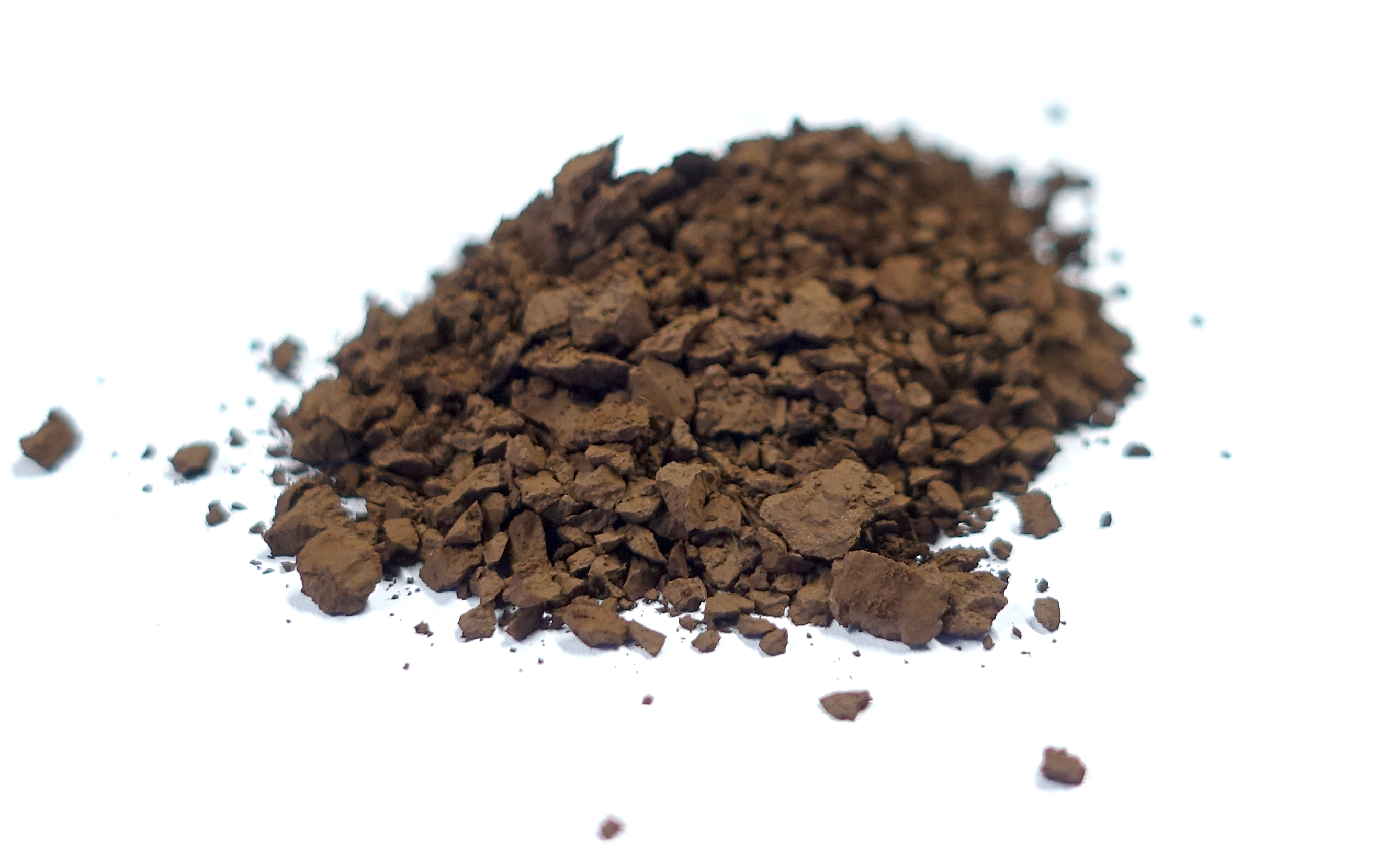
This very pure amorphous boron powder has a very small particle size. Compared to aluminium it theoretically has a much greater energy content, which can be advantageous in appropriate applications (energetic materials). However, since boron is always covered with a layer of boron trioxide , albeit an extremely thin one, the use of magnesium fluoride should be considered. Boron is extremely reactive and reacts very quickly with metals with the exothermic formation of metal borides. However, it is stable in open air.Amorphous boron is primarily used in the following areas:Glass and ceramics Pyrotechnics Gas generators Aerospace technology (ignition device Actuators)Semiconductors Metallurgy Carbide tools Radiation absorbers Signal word: ATTENTION! Danger warnings H302 Harmful if swallowed Safety instructions -
Content: 0.5 Kilogramm (€690.20 / 1 Kilogramm)
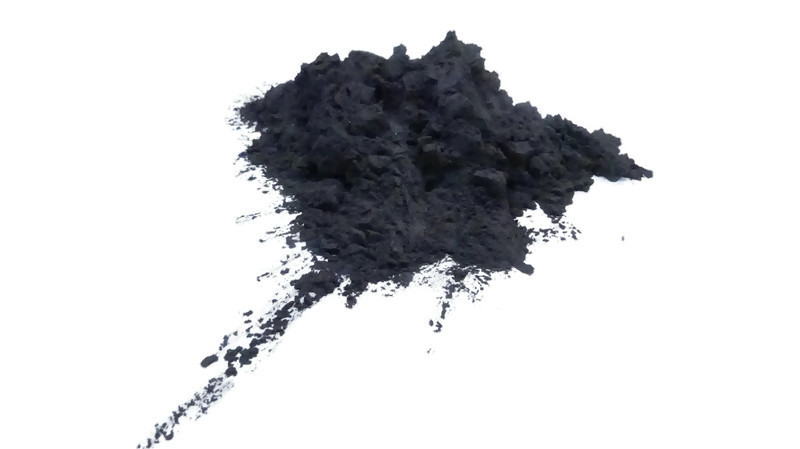
Boron carbide (also known as black diamond) is, like our silicon carbide and silicon nitride, an exceptionally hard and therefore wear-resistant material. This has made it the material of choice for nozzle materials, baffle plates (jet mills), ballistic protection elements, cutting tools, and grinding, polishing, or lapping powders. More recent applications have emerged in foundry technology (cost-effective supply of boron), rocket fuels, and semiconductor technology. We supply common fractions. Should you still find anything missing, please feel free to contact us. Chemical/Physical Specifications Color: Black Formula: B4C B + C: min. 95.0% B: min. 77.0% C: max. 18.0% B2O3: 1.0% Fe: max. 0.5% Knoop Hardness: 3000 Mohs Hardness: < 9.5 (for comparison: Mohs hardness of diamond: 10) Specific gravity: 2.51 g/cm³ Melting point: 1495 °C Crystal structure: monocrystalline
Content: 0.1 Kilogramm (€178.50 / 1 Kilogramm)