
min. 99.0% lithium carbonate, technical grade, Li2CO3, CAS No.: 554-13-2

€13.69
% Regular price: €15.47 (11.51% saved)
Available, delivery time: 2-5 days
Product information "min. 99.0% lithium carbonate, technical grade, Li2CO3, CAS No.: 554-13-2"
Chemical/physical analysis values (typical)
- Appearance: White, very dusty powder
- insoluble. in / insol. in HCL [%]: 0.0001
- Ca[%]:
- 0.01 Cl [%]:
- 0.01 SO4 [%]:
- 0.01 H2O [%]: 0.24
- Na [%]: 0.05
- K [%]: 0.004
.gif)
Signal word: Attention!
Danger information
H302 Harmful if swallowed.H319 Causes serious eye irritation.
Safety instructions
P264 Wash skin thoroughly after use.P270 Do not eat, drink or smoke when using.
P280 Wear eye/face protection.
P301 + P312 IF SWALLOWED: Call a POISON CENTER/doctor if you feel unwell.
P305 + P351 + P338 IF IN EYES: Rinse cautiously with water for several minutes. If possible, remove any contact lenses. Continue rinsing.
P337 + P313 If eye irritation persists: Get medical advice/attention.
| Also known as: | Kohlensäure Lithiumsalz, Lithium carbonate, Lithiumcarbonat |
|---|---|
| CAS-Nr.: | 554-13-2 |
| Calcium: | max. 0,01 % |
| Color: | Weiß |
| Fe2O3: | max. 0,0001 % |
| Feuchtigkeit: | 0,24 % |
| HCl - unlösliche Bestandteile: | < 0,03 % |
| Kalium: | 0,004 % |
| Natrium: | 0,05 % |
| Produktcharakter: | Staub, feines Pulver |
| SO4: | 0,01 % |
| Stoffgruppe: | Carbonate |
| kind of product: | chemical |
| material: | Lithiumcarbonat, technisch |
| purity: | min. 99,7 % |
| zur GPSR-Informationspflicht: | Hersteller + Verantwortliche Person: Werth-Metall, Ringstr. 41b, 99428 Grammetal, info@werth-metall.de |
Login
Passend dazu:
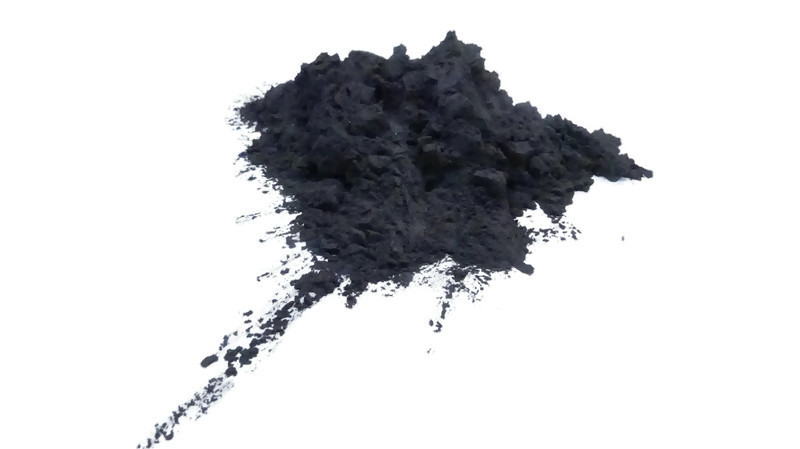
Boron carbide (also known as black diamond) is, like our silicon carbide and silicon nitride, an exceptionally hard and therefore wear-resistant material. This has made it the material of choice for nozzle materials, baffle plates (jet mills), ballistic protection elements, cutting tools, and grinding, polishing, or lapping powders. More recent applications have emerged in foundry technology (cost-effective supply of boron), rocket fuels, and semiconductor technology. We supply common fractions. Should you still find anything missing, please feel free to contact us. Chemical/Physical Specifications Color: Black Formula: B4C B + C: min. 95.0% B: min. 77.0% C: max. 18.0% B2O3: 1.0% Fe: max. 0.5% Knoop Hardness: 3000 Mohs Hardness: < 9.5 (for comparison: Mohs hardness of diamond: 10) Specific gravity: 2.51 g/cm³ Melting point: 1495 °C Crystal structure: monocrystalline
Content: 0.1 Kilogramm (€178.50 / 1 Kilogramm)

Copper oxide is an extremely versatile chemical substance. With its deep black to brownish shape and very fine particles, it transforms into a multifaceted green/blue tone after firing in ceramic paints, thus creating interesting effects. As a doped material, it is currently being investigated for its superconductivity.It is also used in the following areas of application: Absorbents (physical, chemical) -Pesticides -Antifouling agents -Oxidizers -Coating base material (e.g. in the area of sputtering) and much more Chemical analysis: Formula: CuO CAS No.: 1317-38-0 Min. content: 98.9 % Cu: 78.90 % Chloride: 0.015 % Zn: 0.079 % Pb: 0.003 % Screen passage: D50 40µmSignal word: ATTENTIONX00 056! Hazard informationH302: Harmful if swallowed.H410: Very toxic to aquatic organisms with long-term exposure Effect.Safety informationP273: Release into the environment avoidP264: Wash thoroughly after useP270: Do not eat, drink or drink when in use smoking.P301+P312: If swallowed: If you feel unwell “POISON CENTER or ARTZ call., P330: Rinse mouthP501: Dispose of contents/container in accordance with local regional, national, international regulations
Content: 0.25 Kilogramm (€33.32 / 1 Kilogramm)

The copper(I) oxide supplied by us is already very finely milled. This makes it ideally suited for use as an antifouling pigment in shipbuilding.Copper(I) oxide is also used in numerous other fields:- Absorbent (physical, chemical)- Pesticides- Oxidizing agent- Petrochemical auxiliary- Paints- Semiconductor components- and much more.Typical chemical/physical specifications - Formula: Cu2O- CAS No.: 1317-39-1- Purity: min. 97.0 %- Cu: min. 86.50 %- Chloride + sulfate: max. 0.50 %- Residue on 45µm sieve: 0.50 %- Metallic impurities: max. 0.5 %- Acetone-soluble components: max. 0.5 % Signal word: WARNING!Hazard StatementsH302: Harmful if swallowed.H410: Very toxic to aquatic life with long lasting effects.Precautionary StatementsP273: Avoid release to the environmentP264: Wash thoroughly after handlingP270: Do not eat, drink or smoke when using this product.P301+P312: IF SWALLOWED: Call a POISON CENTER or doctor if you feel unwell.P330: Rinse mouthP501: Dispose of contents/container in accordance with local/regional, national, international regulations
Content: 0.5 Kilogramm (€33.32 / 1 Kilogramm)

Praseodymium (III,IV) oxide is generally used in research and certain technical applications. Due to the special properties of praseodymium, this compound can be used as a dopant in some specialized electronic devices and high-temperature ceramics. The main use is in the production of special glasses and color filters.Signal word: ATTENTION!Danger warningsH302: Harmful if swallowed.H315: Causes skin irritation.H319: Causes serious eye irritation.H335: May cause respiratory irritation.Safety instructionsP261: Avoid breathing dust/fume/gas/mist/vapour/spray.P264: Wash hands thoroughly after use.P270: Do not eat, drink or smoke when using.P280: Wear protective gloves/protective clothing/eye protection/face protection.P301+P312: If swallowed: If you feel unwell, call a poison center/doctor.P302+P352: In case of contact with skin: Wash with plenty of soap/water.P304+P340: If inhaled: Remove person to fresh air and keep comfortable for breathing.P305+P351+P338: If in eyes: Rinse cautiously with water for several minutes. If possible, remove any contact lenses. Continue rinsing.P337+P313: If eye irritation persists: Get medical advice/attention.Chemical specification (typical values) informationSm2O3 < 0.0000002%Y2O3 < 0.0000001%Fe2O3 0.0005%Formula Pr6O11Werth-Metall brandManufacturer number 12037-29-5SiO2 < 0.01%CaO 0.002%CAS no. 12037-29-5Cl < 0.025%Color blackDelivery form fine powderTREO at least 99%Pr6O11/TREO min. 99.5%Ignition loss max. 1.0%La2O3 0.04%CeO2 0.12%
Content: 0.5 Kilogramm (€499.80 / 1 Kilogramm)

Didymium Today, however, the term is no longer used because the rare earths have been identified and divided into individual elements. Didymium was first discovered in 1841 by the Swedish chemist Carl Gustaf Mosander. He isolated it from cerite, a mineral that is a mixture of rare earths. However, it later turned out that Didymium itself is a mixture of the elements Praseodymium and neodymium. Didymium with its essential components Praseodymium and Neodymium finds a wide range of applications in glass technology and electronics. For example, they are used for the production of Permanent magnets, Lasers / optical fibers, Glasses (special glasses for glassblowers - yellow filters) and Ceramics (glazes) used. It is also occasionally used as a catalyst in pyrotechnics and rocket technology.At high temperatures, the mixed oxalate decomposes into the corresponding oxides. This means that the didymium can easily be further processed in other fields of application. Signal word: ATTENTION! Hazard warningsH302: Harmful if swallowed. H315: Causes skin irritation. H319: Causes serious eye irritation. H335: May cause respiratory irritation.Safety information P261: Avoid breathing dust/fume/gas/mist/vapour/spray. P264: Wash hands thoroughly after use. P270: Do not eat, drink or smoke when using. P280: Wear protective gloves/protective clothing/eye protection/face protection. P301+P312: If swallowed: Call a poison control center/doctor if you feel unwell. P302+P352: In case of contact with skin: Wash with plenty of water/soap. P304+P340: If inhaled: Remove person to fresh air and keep comfortable for breathing. P305+P351+P338: If in eyes: Rinse cautiously with water for several minutes. If possible, remove any contact lenses. Continue rinsing. P337+P313: If eye irritation persists: Get medical advice/attention. Typical chemical composition Name Formula Metal content [wt.%] Content M-oxalate x hydrate [wt.%] Neodymoxalate (Nd(C2O4)3) x 10H2O 25.31 64.28 Praseodymoxalate (Pr(C2O4)3) x 10H2O7.53 19.40 Lanthanum(III) oxalate nonahydrate La2(C2O4)3 x 9 H2O 3.72 9.43 Cerium(III) oxalate nonahydrate Ce2(C2O4)3 x 9 H2O 0.03 0.08 Samarium(III) oxalate decahydrate Sm2(C2O4)3 x 10 H2O 1.99 4.93 Gadolinium oxalate (Gd(C2O4)3) x H2O 0.45 1.09 Europium(III) oxalate decahydrate Eu2(C2O4)3 x 10 H2O 0.01 0.02
Content: 0.5 Kilogramm (€178.00 / 1 Kilogramm)

Bismuth trioxide is a chemical compound consisting of the elements bismuth and oxygen. It has the chemical formula Bi2O3. Bismuth oxide is used in various industries due to its properties and applications. In the glass industry , bismuth trioxide is used as an additive for optical glass because it changes the refractive index of the glass. This also leads to a changed light refraction / refractive index, which leads to an improved optical quality of the glass. Bismuth trioxide is also used as a catalyst in polymers to accelerate the polymerization . In the ceramic industry , Bismuth (III) oxide is used as a glaze additive to create a shiny Surface to achieve. It is also used as a dye for ceramic products, giving them a characteristic yellow color. In the electronics industry, bismuth trioxide is used as a dielectric in capacitors and as an alloy additive for solder materials. A distinctive property of the oxide is that it influences remanence and coercive field strengths in electromagnetic components. Extremely fast switching electromagnets have already been developed with the help of the addition of bismuth trioxide. Chemical and physical properties CAS No.: 1304-76-3 Tamped density: 3.6 g/cm³ Average particle size: D50 < 10 µm Drying loss: < 0.1% Bi: > 89.3% Li: < 5 ppm Na: < 2 ppm K: < 2 ppm Ca: < 5 ppm Mg: < 2 ppm Al: < 5 ppm Si: < 5ppm As: < 2 ppm Cd: < 5 ppm Fe: < 5 ppm Sn: < 5 ppm Ni: < 5 ppm Cu: < 2 ppm Pb: < 5ppm Ag: 2 ppm Sb: < 5 ppm Cl: < 10 ppm SO4-: < 10 ppm

Bismuth subcarbonate is an important inorganic chemical in various industries. It is used in the cosmetic industry as skin care product and in pharmacy as antacid . The powder is often used as white pigment used in paints, ceramics and glass and is particularly popular due to its high hiding power. Bismuth subcarbonate also has applications in the electronics industry, where it is used as a dielectric in capacitors. It is important to note that bismuth subcarbonate is not soluble in water and is non-toxic. However, it is recommended to exercise caution when handling. Chemical and physical properties Bismuth content in the dried product: 81.7% Drying loss: 0.5% Ag: < 25 ppm As: < 5 ppm Cl: < 500 ppm Cu: < 50ppm Metal content: < 1.0% NO3: < 0.4% Pb: < 20ppm