
min. 99.0% iron(II,III) oxide, 0.3 µm, synthetic powder, magnetite, black iron oxide, Fe3O4, CAS No.: 1317-61-9

€2.50
Available, delivery time: 2-5 days
Product information "min. 99.0% iron(II,III) oxide, 0.3 µm, synthetic powder, magnetite, black iron oxide, Fe3O4, CAS No.: 1317-61-9"
This black iron oxide (Fe₃O₄) is a high-quality, synthetically manufactured pigment for all applications requiring high purity and uniform particle distribution. Chemically, it is iron(II,III) oxide, also known as magnetite – that iron oxide modification which, in addition to its intense black coloration, also brings magnetic properties.
Thanks to its narrow grain size distribution and constant composition, the pigment is particularly suitable for coatings, paints and varnishes, pigment pastes, construction chemicals, and magnetic materials – everywhere, that is, where reproducible color values and a clean, deep black are required.
Constant Quality Through Synthetic Manufacturing
Unlike naturally sourced iron oxides, neither the iron content nor the color tone of synthetic Fe₃O₄ fluctuates from batch to batch. The synthetic origin ensures constant quality and reliable performance in different industrial processes – from wet grinding through extrusion to coloring of mineral binders.
For processors, this means: less recipe adjustment, lower scrap rates, and plannable color consistency in series production. Even users who only occasionally process smaller quantities benefit from this – the result of the sample can later be reliably reproduced.
Fine Particle Size of 300 Nanometers for Optimal Dispersion
The low average particle size of 300 nanometers (0.3 µm) is the decisive technical advantage of this iron oxide black pigment. It enables improved dispersion in both liquid and solid formulations, reduces energy input during dispersion, and provides high color strength with relatively low application rates.
The result: uniform, streak-free coloring, good coverage, and enhanced efficiency and effectiveness of the end product. Especially in thin-layer systems such as varnishes, glazes, or printing inks, the fine particle size is noticeable through a smooth, homogeneous appearance.
Magnetic Properties as a Functional Added Benefit
As iron(II,III) oxide, Fe₃O₄ is ferrimagnetic and thus magnetically attractable. This property distinguishes magnetite from other black pigments and opens applications far beyond mere coloring – such as in ferrites, magnetic pigments, toners, or functional coatings, where coloring and magnetic effect are to be combined.
Excellent Stability and Color Fastness
The pigment additionally impresses with excellent stability and color fastness. It is light- and weather-resistant, alkali-resistant, chemically largely inert, and does not tend to bleed or migrate. This makes it the preferred choice for manufacturers and processors who value durable and high-quality results – such as for facade paints, paving stones and concrete goods, industrial varnishes, or technical plastic parts.
Typical Applications at a Glance
- Paints, varnishes and coatings (solvent- and water-based)
- Construction chemicals and concrete goods: concrete, screed, mortar, plaster, paving stones, roof tiles
- Pigment pastes, inks and printing inks
- Plastics and elastomers (masterbatch, compounds)
- Magnetic materials and functional materials (ferrites, toner, magnetic pigments)
- Ceramics, glazes and engobes
- Handicrafts, restoration and artist supplies: lime and silicate paints, swamp lime, clay plasters
- Creative and DIY projects: terrazzo, concrete lights, planters, epoxy resin objects
FAQ – Frequently Asked Questions About Black Iron Oxide (Fe3O4)
For Private Customers and DIY Enthusiasts
What can I use black iron oxide for privately?
The pigment is very frequently used for coloring concrete, screed, mortar, joint compound, lime and silicate paints, as well as clay and lime plasters. It is also popular for creative projects such as terrazzo, concrete lights, planters, or epoxy resin objects. Iron oxide black is also valued in restoration and artist supplies because it is very color-stable.
What does Fe3O4 mean – is that the same as regular iron oxide?
Fe3O4 is iron(II,III) oxide, also called magnetite. It is the black variant of iron oxides. Red pigments, on the other hand, consist of Fe2O3, yellow ones of iron oxide hydroxide. All belong to the same pigment family and can be mixed well with each other.
How much pigment do I need to color concrete black?
As a guide, 1–5% pigment by weight of cement is typical. From about 5%, color saturation is usually reached; higher dosages bring little additional color depth and can impair strength. For a deep anthracite to black, 3–5% is typical depending on cement color. Recommendation: always make a small sample plate, as the color tone appears significantly lighter after drying.
How do I mix in the pigment correctly?
Best to pre-disperse the powder in some mixing water before processing or thoroughly premix it with the dry binder. This prevents pigment nests and streaks. Extend mixing time slightly compared to uncolored material.
Is the color tone weatherproof – or does it fade in outdoor areas?
Iron oxide pigments are considered very light- and weather-resistant as well as lime-fast. Lightening in outdoor areas is usually not due to pigment degradation, but to lime efflorescence on the concrete surface.
Can I use it to color epoxy resin or wall paint?
Yes. The pigment is fundamentally suitable for epoxy resins and dispersion paints and, thanks to its fine particle size, can be easily stirred in. With resins, sparing dosage is recommended, as over-pigmentation can affect curing.
Is black iron oxide magnetic?
Yes. Fe3O4 (magnetite) is ferrimagnetic and is attracted by a magnet. Precisely this property makes it interesting for magnetic materials. In practice, it plays no disruptive role for coloring concrete or paints.
How should I store the pigment?
Dry, cool, and tightly sealed. Moisture leads to lumping; the pigment is usually still usable afterward, but should be ground up or sieved before use.
Is handling a health concern?
Iron oxide pigments are considered toxicologically non-critical. Since it is a fine powder, dust formation should still be avoided and a dust mask, gloves, and safety glasses should be worn. Please always consult the current safety data sheet.
Does the pigment rub off once it has dried?
In a cured binder, the pigment is firmly bound and does not bleed out. As loose powder, however, it colors strongly – protect work surfaces, tools, and clothing accordingly.
Are there also small quantities for private use?
Yes, we offer both small quantities for individual projects and larger containers for regular use. The available options can be found directly in the product selection.
For Business and Industrial Customers
What parameters does the technical data sheet contain?
Fe3O4 content, average particle size (D50), bulk density, oil absorption, pH value, moisture content, water-soluble components and residual sieve residue, as well as color values (L*a*b*) and relative color strength against standard. Technical data sheet and safety data sheet are provided upon request.
Can we obtain samples for our own recipe development?
You can order small quantities starting from 100g in the shop for your development.
How does the pigment behave during dispersion?
Thanks to the average particle size of 0.3 µm and narrow distribution, the dispersion effort is minimal. For lacquer systems, pearl mills or dissolvers with suitable wetting and dispersing additivation are recommended; the target fineness of grind is usually achieved quickly.
Is the pigment temperature and chemical resistant?
Fe3O4 is alkali-resistant and stable in common processing procedures. At higher temperatures and oxygen exposure, oxidation to Fe2O3 can begin, leading to a brownish-red color shift. The specific temperature limit should therefore be checked in the respective process window. For high-temperature applications, we are happy to advise on alternatives.
Is the product suitable for plastic coloring and masterbatches?
Yes, particularly for polyolefins and technical thermoplastics within their respective processing temperatures. Please check the thermal load capacity in your specific process.
Can the pigment be used for magnetic applications?
Fe₃O₄ is ferrimagnetic and is used, among other things, in ferrites, magnetic pigments, toners, and functional coatings. Whether the magnetic parameters are sufficient for your application, we will be happy to clarify as part of a sample delivery.
Is the pigment suitable for cosmetic, food, or pharmaceutical applications?
This is a technical grade product. For applications with special purity requirements, please contact us specifically – suitability must be clarified in advance.
How long is the product shelf-life?
With dry, sealed storage, iron oxide pigment has very long storage stability. The key is protection from moisture; lumped material can usually be reprocessed by grinding or sieving.
What terms apply for larger quantities?
We ship stock items quickly. For larger purchase quantities, supply contracts, and call-off quotas, we prepare individual offers – please contact our sales team.
| Also known as: | Trieisentetraoxid, Magnetit, Hammerschlag, black iron oxide, Fe3O4 |
|---|---|
| CAS-Nr.: | 1317-61-9 |
| Color: | Schwarz |
| Farbstärke: | 95 - 105 % |
| Produktcharakter: | feines Pulver |
| Stoffgruppe: | Oxide |
| bulk density: | 1,2 - 1,6 g/dm³ |
| kind of product: | chemical |
| material: | Eisen(II,III)-oxid |
| nominal particle size: | 0,3 µm |
| ph-Wert: | 4 - 8 |
| purity: | mind. 99,0 % (als Fe3O4, Metallbasis) |
| zur GPSR-Informationspflicht: | Hersteller + Verantwortliche Person: Werth-Metall, Ringstr. 41b, 99428 Grammetal, info@werth-metall.de |
Login
Passend dazu
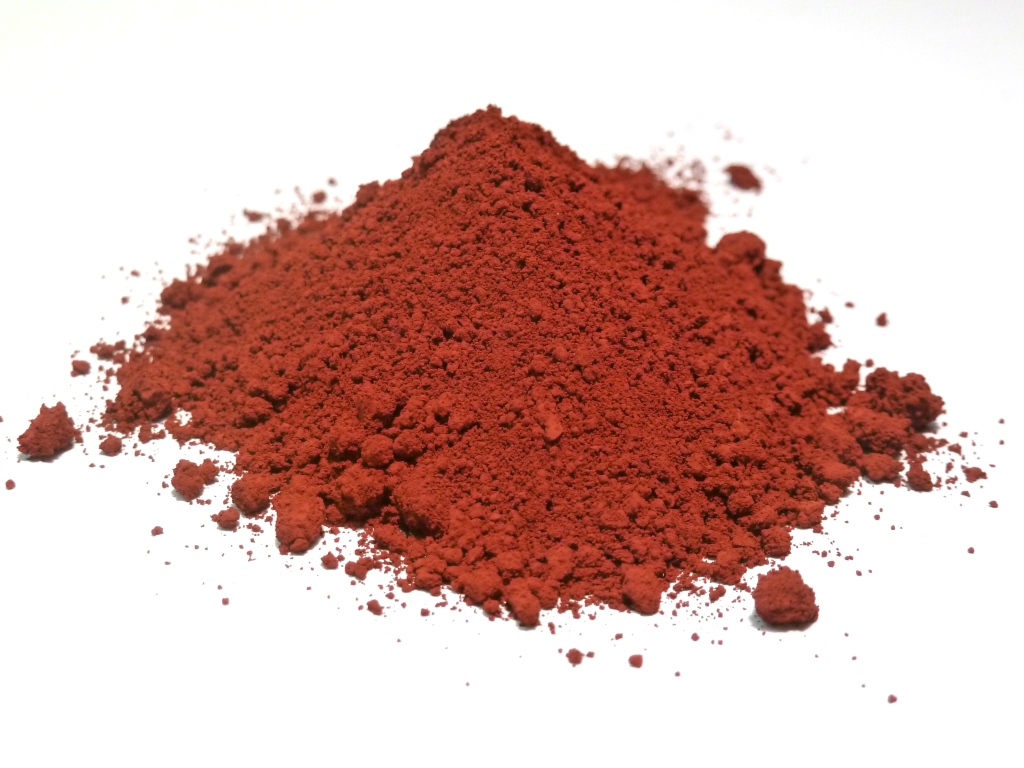
Thisred iron oxideis manufactured synthetically and shows next to onehigh purityoneextremely small primary particle size. Beintense vermilion redcan be ideally used in pigment and ceramic recipes.The use as a catalyst or generally as a chemical reagent is also ideal because of the small particle size.Fe2O3at least 97.50%Water-soluble componentsmax. 0.5%Sieve residue 45µmmax. 0.06%PH valueapprox. 4.5Oil numberapprox. 28g/100gdensityapprox. 5.2 g/cm³conductance500 µS/cm"
Content: 5 Kilogramm (€11.85 / 1 Kilogramm)

Flame sootorCarbon Black / Carbon Black / Lamp Black is produced by burning hydrocarbons with reduced oxygen supply. The flame black powder we offer is typically nanoscale. Among other things, it is also suitable as an extremely opaque black pigment. Possible applications: Additive in polymers Conductive paints (ESD applications) Polymer-based energy storage Black pigment (e.g. toner) Flame retardant coatings and much more. Chemical/physical examination: Average particle size: 95nm (0.095µm) - based on primary particlesResidue on 45µm sieve: 4ppm Toluene extractable components (DIN 53553): 0.010% CAS No.: 1333-86-4 Variety: 101 Carbon min.: 99.9% Opacity (ISO 787/16 & 24): 26.0% (ITRB) Blackness (DIN 55979): 210 PH value: 7.5 Tamping density: 260 g/l Dibutyl phthalate absorption: 0.118 dm³/100g" ThisDextrin (canary dextrin) will be outCornstarchwon. The starch is mixed with steam or catalytically active acid under increased temperature and pressure. This converts the otherwise insoluble starch into awater soluble product, which mainly asbinderapplies. A commonly known use is thisWet adhesive coating (also called gumming) of postage stamps and kraft paper tapes. However, it is also used as a food additive or as a binding agent in pharmaceuticals. The material isvery soluble in waterand binds even at low moisture levels. There are now many dextrin-based artists' colors on the market (mixture of dextrin and pigment, as well as water). Product dataCAS No.: 9004-53-9 Average particle size: 17.50 µmHumidity: max. 10% [MCL 002B]pH value: 2.5 - 4.0 [20% solution]RVA viscosity: 960-2040 mPa*s [MCL 106T]Insoluble components: max. 2% [MCL 340A]Reduced sugar: max. 4.2% [MCL 050A]Bulk density: approx. 0.55 kg/dm³ [MCL 095A]
Content: 0.05 Kilogramm (€47.60 / 1 Kilogramm)

Flame sootorCarbon Black / Carbon Black / Lamp Black is produced by burning hydrocarbons with reduced oxygen supply. The flame black powder we offer is typically nanoscale. Among other things, it is also suitable as an extremely opaque black pigment. This is a prilled version. This means that significantly less dust is created during handling and the material is easier to dose andIn addition, the environmental impact is significantly reduced.Possible applications: Additive in polymers Conductive paints (ESD applications) Polymer-based energy storage Black pigment (e.g. toner) Flame retardant coatings and much more. Chemical/physical examination: Average particle size: 95nm (0.095µm) - based on primary particlesResidue on 45µm sieve: 4ppm Toluene extractable components (DIN 53553): 0.010% CAS No.: 1333-86-4 Variety: 101 Carbon min.: 99.9% Opacity (ISO 787/16 & 24): 26.0% (ITRB) Blackness (DIN 55979): 210 PH value: 7.5 Tamping density: 260 g/l Dibutyl phthalate absorption: 0.118 dm³/100g
Content: 0.25 Kilogramm (€24.76 / 1 Kilogramm)

This copper powthe is specially designed for optical and functional applicationsdeveloped and manufactured worden. This is pure copper, which has been stabilized with 1,5 % oleic acid. In Kunststoffverarbeitung produces outstanding effects in HDPE, LDPE,ABS othe gar PVC. In this context should during the Fertigung of Masterbatches care must be taken to ensure that the powthe nur geringstmöglichen Scherkräften and Verweildauern during hohen Temperaturen ausgesetzt wird. Beide Faktoren könnten sonst the optical Endergebnis negativ beeinflussen. Ebenfalls is this powthe bestens auf den Einsatz in paints/coatings/2K-Harz and screen-printing processes abgestimmt. A ratio of 5/100 (Pigment/Bindemittel) is for ein optisch high-quality result . This produces an impressive copper-metallic effect - the surface sieht anschließend wie ein polished copper sheet aus. Bitte beachten Sie during the processing: screen printing: Maschenweite should drei mal größer als the D90-Wert des powders sein. Aerosol spray cans: Der D90-Wert des powders sollten mindestens drei mal kleiner als the Düsendurchmesser sein. Lacke/paints: Mechanische Einflüsse durch sehr schnell drehende agitators avoid. Dies würde the Partikel beschädigen and den Metallic-Effekt zerstören. Typische chemical and physical Spezifikationen:Purity des Ausgangsmetalls: 99,9 %Laser diffraction: D10 2,75µmLaser diffraction: D50 6,75µmLaser diffraction: D90 16µmBulk density: ca. 0,90 g/cm³Hiding power: ca. 9000 cm³/gAcetone-soluble constituents: 1,5 % (oleic acid)CAS No.: 7440-50-8 Signal word: Danger! Dangerenhinweise H228 - Flammable solid. H302 - Harmful if swallowed H400 - Sehr toxic for aquatic organisms H411 - Toxic for aquatic organisms with long-lasting effects. Precautionary statements P210 - Keep away from heat, hot surfaces, sparks, open flames and other ignition sources. No smoking. P273 - release in the Umwelt avoid. P301+P310 - If swallowed: Sofort Giftinformationszentrum, Arzt anrufen. P330 - Rinse mouth P370+P378 - In case of fire: Metallbrandpulver/Zement/Sand zum Löschen use
Content: 0.1 Kilogramm (€65.50 / 1 Kilogramm)

Copper oxide is an extremely versatile chemical substance. With its deep black to brownish shape and very fine particles, it transforms into a multifaceted green/blue tone after firing in ceramic paints, thus creating interesting effects. As a doped material, it is currently being investigated for its superconductivity.It is also used in the following areas of application: Absorbents (physical, chemical) -Pesticides -Antifouling agents -Oxidizers -Coating base material (e.g. in the area of sputtering) and much more Chemical analysis: Formula: CuO CAS No.: 1317-38-0 Min. content: 98.9 % Cu: 78.90 % Chloride: 0.015 % Zn: 0.079 % Pb: 0.003 % Screen passage: D50 40µmSignal word: ATTENTIONX00 056! Hazard informationH302: Harmful if swallowed.H410: Very toxic to aquatic organisms with long-term exposure Effect.Safety informationP273: Release into the environment avoidP264: Wash thoroughly after useP270: Do not eat, drink or drink when in use smoking.P301+P312: If swallowed: If you feel unwell “POISON CENTER or ARTZ call., P330: Rinse mouthP501: Dispose of contents/container in accordance with local regional, national, international regulations
Content: 0.05 Kilogramm (€52.40 / 1 Kilogramm)

The copper(I) oxide supplied by us is already very finely milled. This makes it ideally suited for use as an antifouling pigment in shipbuilding.Copper(I) oxide is also used in numerous other fields:- Absorbent (physical, chemical)- Pesticides- Oxidizing agent- Petrochemical auxiliary- Paints- Semiconductor components- and much more.Typical chemical/physical specifications - Formula: Cu2O- CAS No.: 1317-39-1- Purity: min. 97.0 %- Cu: min. 86.50 %- Chloride + sulfate: max. 0.50 %- Residue on 45µm sieve: 0.50 %- Metallic impurities: max. 0.5 %- Acetone-soluble components: max. 0.5 % Signal word: WARNING!Hazard StatementsH302: Harmful if swallowed.H410: Very toxic to aquatic life with long lasting effects.Precautionary StatementsP273: Avoid release to the environmentP264: Wash thoroughly after handlingP270: Do not eat, drink or smoke when using this product.P301+P312: IF SWALLOWED: Call a POISON CENTER or doctor if you feel unwell.P330: Rinse mouthP501: Dispose of contents/container in accordance with local/regional, national, international regulations
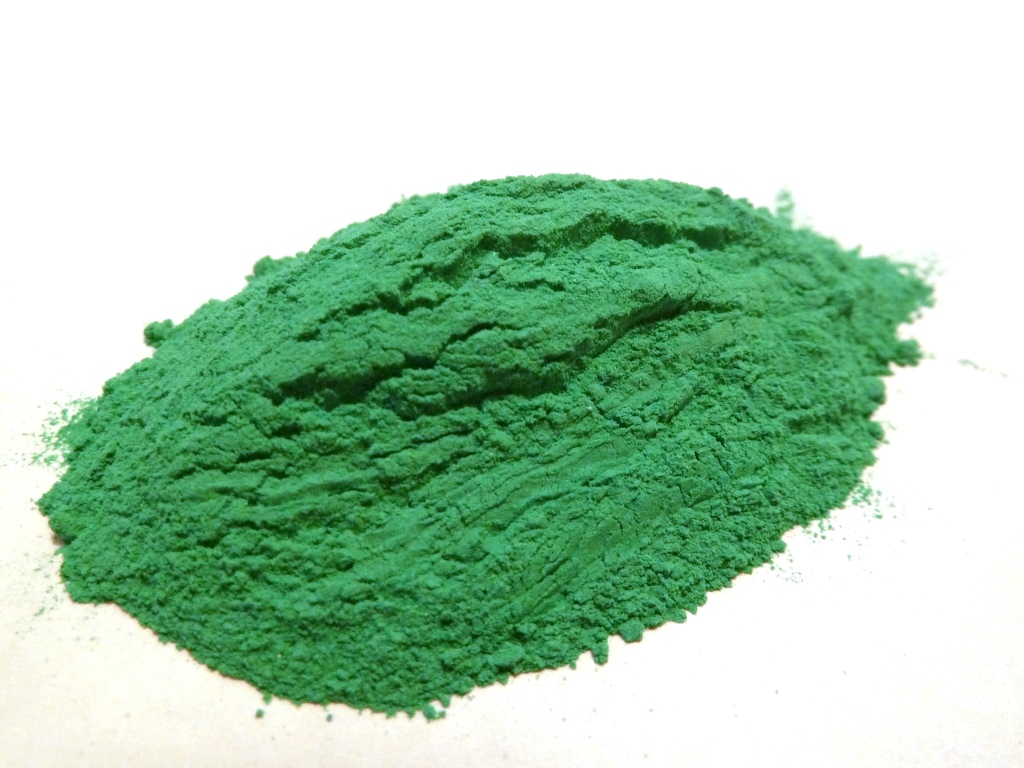
Chemical analysisCu: min. 55% Carbonate: min, 26% Humidity: < 1.0% Ca: < 500 ppm Na: < 500 ppm Fe: < 300 ppm Cl: < 500 ppm Ni: < 30 ppm Pb: < 100 ppm As: < 10 ppm Cd: < 10 ppmSignal word: ATTENTION Harmful if swallowed.H410: Very toxic to aquatic organisms with long-term exposure Effect.Safety informationP273: Release into the environment avoidP264: Wash thoroughly after useP270: Do not eat, drink or drink when in use smoking.P301+P312: If swallowed: If you feel unwell “POISON INFORMATION CENTER or ARTZ call., P330: Rinse mouthP501: Dispose of contents/container in accordance with local regional, national, international regulations
Content: 0.1 Kilogramm (€45.90 / 1 Kilogramm)