
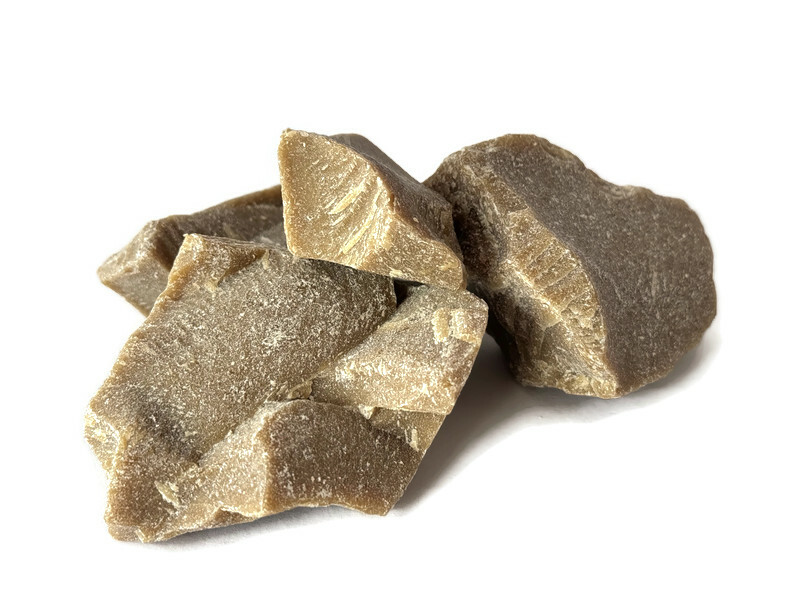
Shellac wax, purified and bleached, lac wax, shellac cera
€4.50
% Regular price: €5.90 (23.73% saved) previously €5.90
Available, delivery time: 2-5 days
Product information "Shellac wax, purified and bleached, lac wax, shellac cera"
Shellac Wax – Bleached Premium Wax
Our high-quality, bleached shellac wax is a natural product obtained through the purification and processing of shellac. It is ideal as a release agent, polishing agent, and protective coating for various industrial applications. Thanks to its unique properties, it is used in the cosmetic, pharmaceutical, and food industries. It is one of the hardest waxes after carnauba wax.
Properties & Benefits:
- 100% natural and biodegradable
- Excellent water- and grease-repellent effect
- High melting point (70 – 86°C) for versatile applications
- Ideal coating agent
- Optimal solution for high-quality polishes and sealants
Applications:
- Food industry: Gloss coating for fruits, confectionery, and coffee beans
- Pharmaceutical industry: Gastric-resistant coating for tablets
- Cosmetics: Ingredient in creams, lipsticks, and hairsprays
- Wood & furniture care: Natural polishing wax for fine wood surfaces
Technical Specifications:
| Parameter | Specification | |
|---|---|---|
| Ester number (mg/g) | 30 – 70 | |
| Acid number (mg/g) | 2 – 15 | |
| Saponification number (mg/g) | 35 – 85 | |
| Iodine number (g/100g) | 0.1 – 3 | |
| Ash | max 1.0% | |
| Moisture | max 1.0% | |
| Specific gravity @ 20℃ | 0.93 – 0.98 | |
| Melting point (℃) | 70 – 86 |
| Acid number: | 2 - 15 mg/g |
|---|---|
| Also known as: | Shellac-Wachs, Lackwachs, Bleached Shellac Wax, Dewaxed Shellac, Shellac Wax, Cera Lacca, Lac Wax, Laccifer-Wachs, Gummi Lacca, Lacca Cera, Lacca Sinica, Cire de Shellac, Cera de Goma Laca, Cera di Gommalacca, Schellackwachs, シェラックワックス, Hartwachs |
| Ash: | max. 1,0 % |
| CAS-Nr.: | 97766-50-2 |
| Feuchtigkeit: | max. 1,0 % |
| Iodine number: | 0,1 - 3 g / 100g |
| Produktcharakter: | grobe Stücke |
| Saponification Number: | 35 - 85 mg/g |
| Stoffgruppe: | Wachse / Ester |
| melting range: | 70 - 86 °C |
Login
Passend dazu
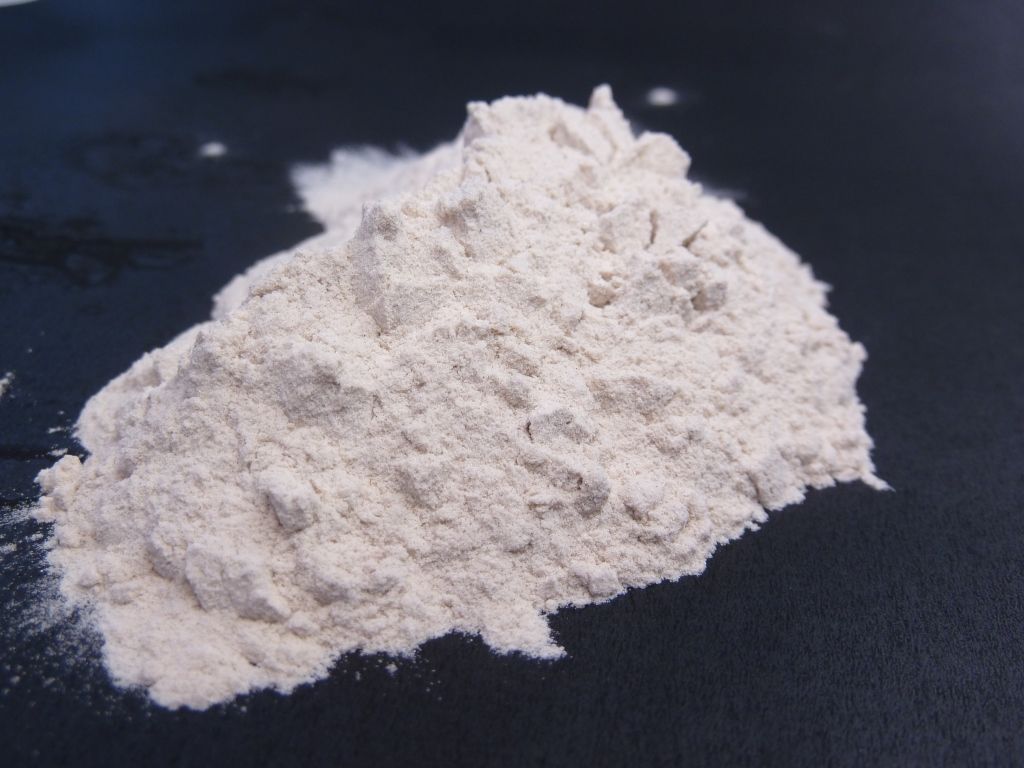
Gum Arabicis aNatural productwith many useful properties. It just shows a lotlow ash valuesand is one of the oldest known binding agents and is already mentioned in the Bible. Whether in cosmetics, food, rubber processing - it still has a variety of applications everywhere today. The product isground until fine as dustand has a slight pink color. It is obtained from acacia trees.Product dataCAS No.: 9000-01-5 alcohol soluble: nowater soluble: yes Drying loss: 8.3% (as delivered)Ash (C): 2.9% Granulometry: [d90 100µm]; [d50 63µm]; [d10 10µm]
Content: 25 Kilogramm (€11.33 / 1 Kilogramm)

Pure polyvinyl butyral PVB B 60T Sieve pass of the powder (100% less than 250µm)free flowing Very efficient because you only need a small amount of solvent (ethanol, ether, etc.). Glass transition temperature: 72.0°CBulk density: 270g/dm³Polyvinyl alcohol: 26.3% CAS no. .: 68648-78-2 Polyvinyl acetate: 1.5% Viscosity according to Höppler: 213.4 mPa/s^-1 (in 10% in ethanol) Polyvinyl butyral(PVB) is athermoplastic polymer, which is used in various applications due to its unique properties. It's overPolyvinyl alcohol(PVA) by reacting withButyraldehydemanufactured. The resultingplastichas onehigh transparency, flexibility and adhesive strengthon. One of the most famous applications ofPVBis the use asInterlayer material in laminated glass. PVBis laminated between two or more sheets of glass to create astrong bond between the slicesto ensure. This leads toSafety glass, which holds together when broken instead of breaking into sharp splinters. This property makes PVB a preferred choice for manufacturingAuto glass and safety glazingin buildings. Another area in whichPVBis used is theProduction of films and coatings. The flexibility and adhesion ofPVBmake it an ideal material for producing films for the packaging industry. It is also used as a coating material toTo protect surfaces from moisture, UV radiation and other environmental influences. Furthermore findsPVBApplication in theprinting ink industry. It will be asbinderused for inks to ensure good adhesion to various surfaces. PVB inks are particularly durable and abrasion-resistant, making them suitable for printing on packaging materials and labels. PVB also has its uses in the production of films forSolar and photovoltaic modules found. The transparency and resistance to weather influences make PVB a suitable material for protecting solar modules from moisture and other environmental influences.
Content: 0.25 Kilogramm (€45.24 / 1 Kilogramm)
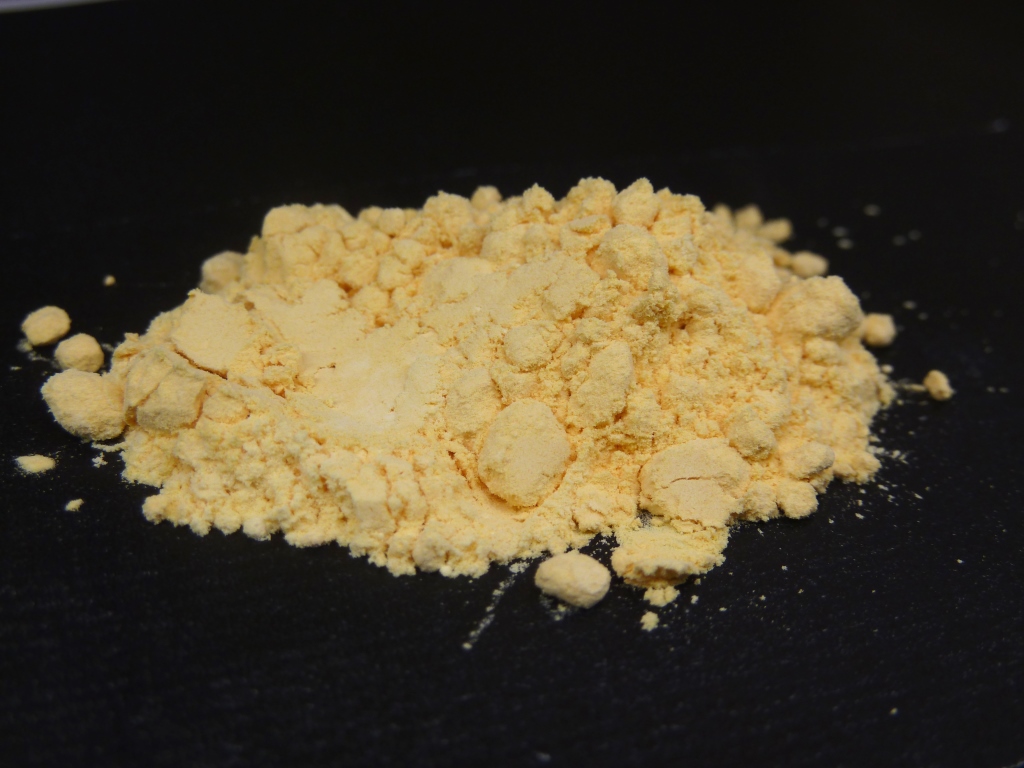
ThisDextrin (canary dextrin) will be outCornstarchwon. The starch is mixed with steam or catalytically active acid under increased temperature and pressure. This converts the otherwise insoluble starch into awater soluble product, which mainly asbinderapplies. A commonly known use is thisWet adhesive coating (also called gumming) of postage stamps and kraft paper tapes. However, it is also used as a food additive or as a binding agent in pharmaceuticals. The material isvery soluble in waterand binds even at low moisture levels. There are now many dextrin-based artists' colors on the market (mixture of dextrin and pigment, as well as water). Product dataCAS No.: 9004-53-9 Average particle size: 17.50 µmHumidity: max. 10% [MCL 002B]pH value: 2.5 - 4.0 [20% solution]RVA viscosity: 960-2040 mPa*s [MCL 106T]Insoluble components: max. 2% [MCL 340A]Reduced sugar: max. 4.2% [MCL 050A]Bulk density: approx. 0.55 kg/dm³ [MCL 095A]
Content: 0.1 Kilogramm (€23.80 / 1 Kilogramm)

White dextrin is a modified starch derivative obtained through a controlled, particularly gentle degradation process of starch. In contrast to yellow dextrin, it is produced at lower temperatures and with shorter reaction times. The result: a light white to slightly cream-colored powder with a low degree of degradation, longer molecular chains, and a neutral odor and taste profile. This gentle processing method makes white dextrin one of the most versatile plant-based binders available. It combines high binding strength with pronounced film formation and significantly higher solution viscosity compared to more degraded dextrins. Where an adhesive requires stability and adhesion, where a coating needs to apply evenly, or where a carrier substance must remain neutral in taste, white dextrin is the proven choice. Your benefits at a glance High binding strength – reliable adhesion on paper, cardboard, textiles, and mineral substrates Excellent film formation – smooth, uniform, and flexible films High solution viscosity – ideal for stable pastes and coatings Neutral in color, odor, and taste – no undesirable influence on the final product Low hygroscopicity – good storage stability, minimal tendency to clump Very low acid number – minimal corrosion tendency in equipment, high product stability Plant-based raw material – renewable and biodegradable Technical specifications Parameter Value Dry matter content min. 97.0% Acidity approx. 0.1 mL NaOH/100 g Solubility at 18.5 °C 55 – 75 Brookfield viscosity 16 – 90 mPa·s Appearance fine white to slightly cream-colored powder Base Potato starch The exceptionally low acidity of approximately 0.1 mL NaOH/100 g demonstrates careful process control with complete neutralization. Free acid residues that could lead to discoloration, odor formation, taste impairment, or corrosion in processing equipment are virtually absent. Application areas Adhesive industry Envelope and label adhesives, corrugated cardboard and tube adhesives, paper sack sealing. The high viscosity and controlled, slower dissolution ensure stable adhesives with clean application properties. Paper and cardboard processing Surface sizing, coating colors, and coatings. The light natural color preserves the paper's whiteness. Textile industry Sizing agents for yarns and fabrics to improve weavability and reduce thread breakage. Construction chemistry and foundry Additive in mortar and gypsum systems as well as binder component in molding materials. Food and pharmaceutical applications Binding, thickening, and filling agents, as well as tablet binders and carriers. Neutral taste, light color, and very low acidity are crucial quality features in these applications. Please note: Suitability for food or pharmaceutical applications must be verified based on the respective valid batch specification and applicable legal requirements. Processing instructions Due to its longer molecular chains and higher residual crystallinity, white dextrin has lower solubility in cold water compared to yellow dextrin. For complete, lump-free dissolution, the following is recommended: Slowly sprinkle the powder into cold water while stirring (do not do the reverse) Heat the mixture to 50 – 70 °C and continue stirring until the solution is clear and uniform Alternatively, allow for longer soaking and soaking times After cooling, the viscosity increases – adjust the solids content accordingly to achieve the target viscosity Storage Store in a dry, cool place, protected from moisture, in tightly sealed containers. Frequently asked questions What is the difference between white and yellow dextrin? White dextrin is produced at lower temperatures and with shorter reaction times. This results in longer molecular chains, a lighter color, neutral taste, and higher solution viscosity. Yellow dextrin ("British Gum") is more extensively degraded, has a yellow to brown color, and dissolves more quickly in cold water – but with significantly lower solution viscosity. Why does white dextrin not dissolve completely in cold water? Due to the gentle degradation process, longer molecular chains and a higher proportion of partially crystalline structure remain. Additionally, fewer hydrophilic end groups are formed. Heating to 50 – 70 °C reliably dissolves the product. Is white dextrin the same as starch? No. Starch is the raw material. White dextrin is derived from it through targeted thermal or hydrolytic degradation, resulting in fundamentally different solubility, viscosity, and binding properties. What does the low acid value of 0.1 mL NaOH/100 g mean? The value indicates that virtually no free acid residues remain in the product. This means high stability, neutral taste, no tendency to discoloration, and no risk of corrosion to your equipment. What is white dextrin most commonly used for? The largest application area is adhesives based on paper and cardboard. It is also established in paper coating, textile sizing, construction chemistry, and as a binding and filling agent in food and pharmaceutical products. How can I achieve a lump-free solution? Always sprinkle the powder into cold water and then heat it. If the powder is added to already hot water, the surface of the particles will gelatinize and trap dry material inside. Is the product biodegradable? Yes. White dextrin is entirely based on plant-based starch and is biodegradable. What are the technical specifications of this white dextrin? The dry matter content is at least 97.0%. The acidity is approximately 0.1 mL NaOH/100 g. The solubility at 18.5 °C is in the range of 55 – 75. The Brookfield viscosity is 16 – 90 mPa·s. How should white dextrin be stored? Store in a dry, cool place, protected from moisture, in tightly sealed containers. Due to its low hygroscopicity, storage stability is good, and the tendency to clump is low. Is white dextrin suitable for food or pharmaceutical applications? White dextrin is used in these areas as a binding, thickening, and filling agent, as well as a tablet binder and carrier. However, its suitability must always be verified based on the valid batch specification and applicable legal requirements. The product on this page is of technical quality.
Content: 0.1 Kilogramm (€23.80 / 1 Kilogramm)
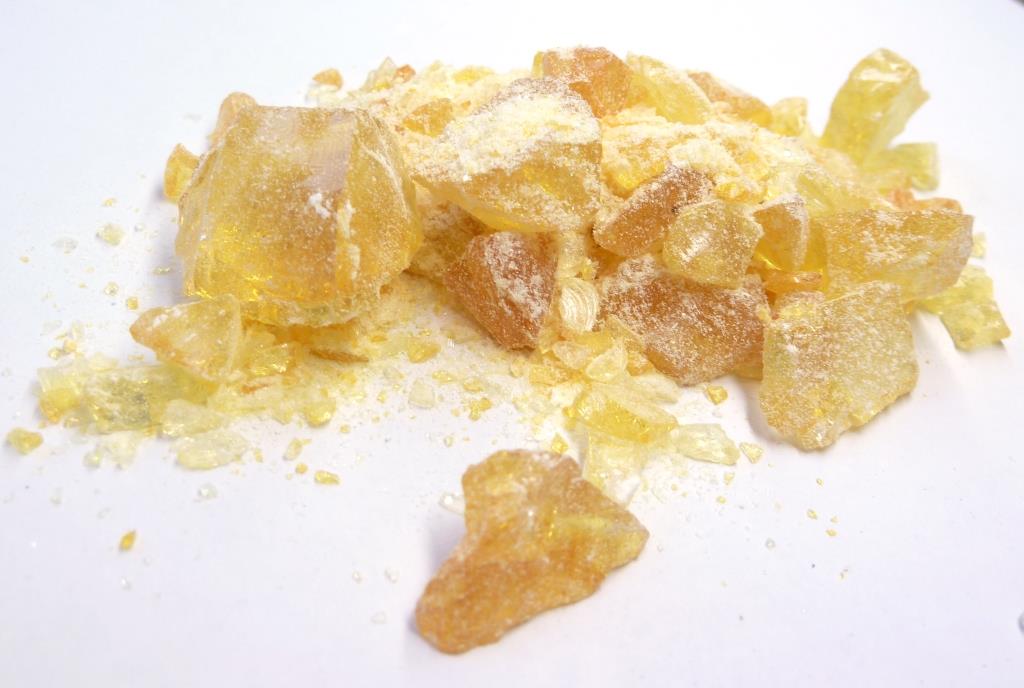
Ourrosinis pronounced byhigh quality. It can be stored almost indefinitely under dry conditions and is also suitable for use in the field ofInstrument manufacturing. The product is delivered in coarse and fine pieces. There may be deposits of fine dust. Product dataCAS No.: 8050-09-7 alcohol soluble: yes water soluble: no Specific melting point (batch dependent): 70-75°C Gardner color number: 4-6 Specific value according to ASTM D-509: "X-4a" Basic proportion: 155-165 [mgKHO/g] Application examples: - Laboratory chemical - flux (soldering) - Bow resin, violin resin or similar. - Binders - and much more.
Content: 0.5 Kilogramm (€21.42 / 1 Kilogramm)

Calcium sulfate dihydrate (CAS number: 10101-41-4) is a compound of calcium, sulfur and oxygen, also known as gypsum. The chemical formula is CaSO4 * 2H2O. Formula: CaSO4*2H2O CAS No.: 10101-41-4 Purity: min. 99.10 % CaO: 37.60% SO3-: 53.7% CO2: 0.8 % Whiteness: 89 Particle size distribution Screen passage /Result 63µm sieve > 99.0% 50µm sieve > 92.0% 40µm sieve > 87.0% 20µm sieve > 70.0%
Content: 0.1 Kilogramm (€20.20 / 1 Kilogramm)