
Iron(III) hydroxide oxide, yellow, synthetic (Iron oxide yellow; Pigment Yellow 42, C.I. 77492)

€99.95
Available in 22 days, delivery time 2-5 days
Product information "Iron(III) hydroxide oxide, yellow, synthetic (Iron oxide yellow; Pigment Yellow 42, C.I. 77492)"
Synthetic yellow iron oxide is an inorganic yellow iron pigment. The product offered here is chemically iron(III) oxide-hydroxide (FeOOH). “Yellow iron oxide” and “iron oxide yellow” are the common trade names; iron(III) oxide-hydroxide describes the chemical composition more precisely.
Properties and applications
Yellow iron oxide is commonly used as an inorganic pigment for colouring. Iron(III) oxide-hydroxide may also be of interest as a functional raw material for industrial development, testing and research. Its suitability for a particular application depends, among other things, on the formulation, processing conditions and required product properties.
Product specifications
| Property | Specification / range | Result |
|---|---|---|
| Chemical composition, expressed as FeOOH | ≥ 95 % | 99.97 % |
| Oil absorption | 25–35 g/100 g | 31 g/100 g |
| Water-soluble matter | ≤ 0.3 % | 0.20 % |
| pH value | 3–7 | 5.8 |
| Volatile matter at 105 °C | ≤ 1 % | Complies |
| Hiding power | 95–105 % | 100 % |
| Particle size fraction above 45 µm | ≤ 0.3 % | < 0.01 % |
Product identification and storage
| Product | Synthetic yellow iron oxide |
|---|---|
| Chemical name | Iron(III) oxide-hydroxide |
| Formula | FeOOH |
| CAS number | 51274-00-1 |
| Storage | Store in a dry, well-ventilated place at 5–35 °C; protect from direct sunlight. See the label for further information. |
Frequently asked questions (FAQ)
What is the difference between yellow iron oxide and iron(III) oxide-hydroxide?
There is no difference. “Yellow iron oxide” or “iron oxide yellow” is the trade name for the chemical compound iron(III) oxide-hydroxide (FeOOH).
What is synthetic yellow iron oxide used for?
Synthetic yellow iron oxide is used as an inorganic pigment for colouring and as a raw material in industrial development, testing and research processes.
How should yellow iron oxide be stored?
Yellow iron oxide should be stored in a dry, well-ventilated place at 5–35 °C and protected from direct sunlight.
What is the CAS number for yellow iron oxide (FeOOH)?
The CAS number for iron(III) oxide-hydroxide is 51274-00-1.
| Also known as: | Eisen(III)-oxidhydrat Eisenhydroxidoxid C. I. Pigment Yellow 42 (Chinesischgelb) C. I. Pigment Yellow 43 (Mapicogelb) |
|---|---|
| CAS-Nr.: | 51274-00-1 |
| Color: | Gelb |
| Flüchtige Bestandteile (ISO 787/2): | < 1,0 % |
| Stoffgruppe: | Oxide |
| material: | Eisen(III)-hydroxidoxid |
| purity: | mind 95,0 % (als FEOOH) |
| zur GPSR-Informationspflicht: | Hersteller + Verantwortliche Person: Werth-Metall, Ringstr. 41b, 99428 Grammetal, info@werth-metall.de |
| Ölzahl (ISO 787/5): | 25 - 35 g/100g |
Login
Fits together

Our naturally obtained magnetite is a fine, black powder that is obtained from the natural rock magnetite. The product is characterized by a high purity and meets typical requirements for industrial applications. The specified composition has a purity value of at least 92.7%. In addition to the main mineral component, there may be admixtures depending on the raw material. The CAS number is used for clear identification. 1317-61-9 specified. Product advantages at a glance Naturally derived – from the mineral rock Fine powder – well suited for further processing High purity from min. 92.7% Black coloring typical for the raw material spectrum Typical areas of application Magnesite is used in various industries - for example as a raw material in chemical processes, in further processing into iron oxide products and in applications in which mineral quality and a constant raw material base play a role. Technical specifications Description: Magnetite Formula: Fe3O4 Purity: min. 92.7% CAS No.: 1317-61-9 Appearance: black powder
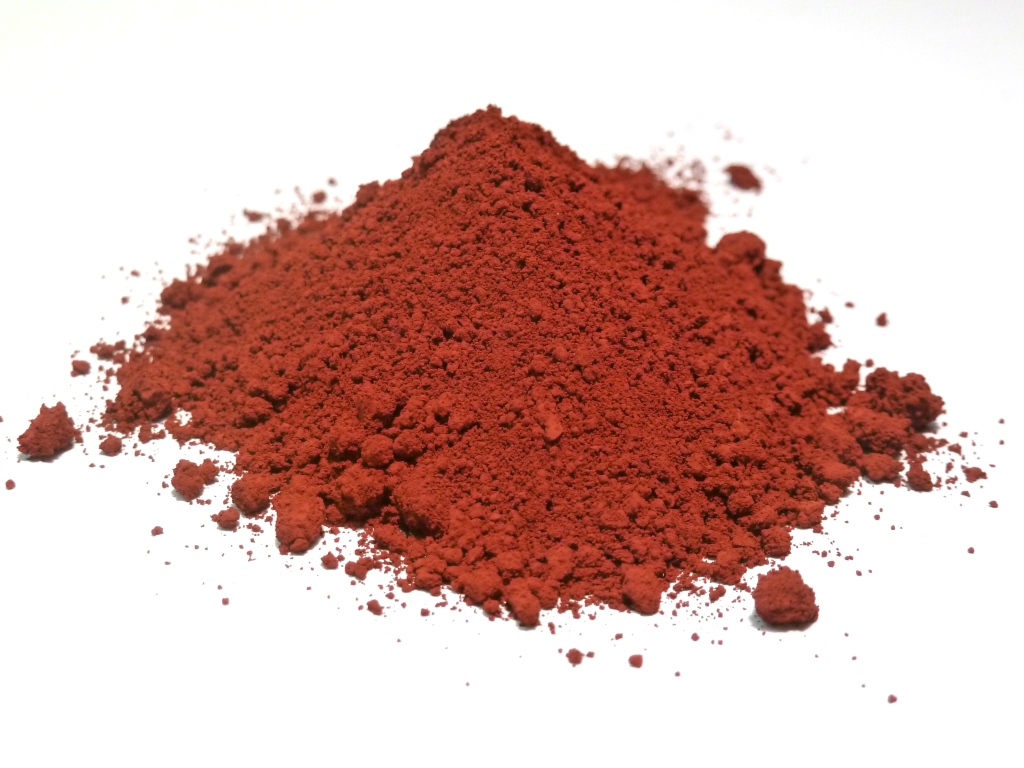
Thisred iron oxideis manufactured synthetically and shows next to onehigh purityoneextremely small primary particle size. Beintense vermilion redcan be ideally used in pigment and ceramic recipes.The use as a catalyst or generally as a chemical reagent is also ideal because of the small particle size.Fe2O3at least 97.50%Water-soluble componentsmax. 0.5%Sieve residue 45µmmax. 0.06%PH valueapprox. 4.5Oil numberapprox. 28g/100gdensityapprox. 5.2 g/cm³conductance500 µS/cm"

White dextrin is a modified starch derivative obtained through a controlled, particularly gentle degradation process of starch. In contrast to yellow dextrin, it is produced at lower temperatures and with shorter reaction times. The result: a light white to slightly cream-colored powder with a low degree of degradation, longer molecular chains, and a neutral odor and taste profile. This gentle processing method makes white dextrin one of the most versatile plant-based binders available. It combines high binding strength with pronounced film formation and significantly higher solution viscosity compared to more degraded dextrins. Where an adhesive requires stability and adhesion, where a coating needs to apply evenly, or where a carrier substance must remain neutral in taste, white dextrin is the proven choice. Your benefits at a glance High binding strength – reliable adhesion on paper, cardboard, textiles, and mineral substrates Excellent film formation – smooth, uniform, and flexible films High solution viscosity – ideal for stable pastes and coatings Neutral in color, odor, and taste – no undesirable influence on the final product Low hygroscopicity – good storage stability, minimal tendency to clump Very low acid number – minimal corrosion tendency in equipment, high product stability Plant-based raw material – renewable and biodegradable Technical specifications Parameter Value Dry matter content min. 97.0% Acidity approx. 0.1 mL NaOH/100 g Solubility at 18.5 °C 55 – 75 Brookfield viscosity 16 – 90 mPa·s Appearance fine white to slightly cream-colored powder Base Potato starch The exceptionally low acidity of approximately 0.1 mL NaOH/100 g demonstrates careful process control with complete neutralization. Free acid residues that could lead to discoloration, odor formation, taste impairment, or corrosion in processing equipment are virtually absent. Application areas Adhesive industry Envelope and label adhesives, corrugated cardboard and tube adhesives, paper sack sealing. The high viscosity and controlled, slower dissolution ensure stable adhesives with clean application properties. Paper and cardboard processing Surface sizing, coating colors, and coatings. The light natural color preserves the paper's whiteness. Textile industry Sizing agents for yarns and fabrics to improve weavability and reduce thread breakage. Construction chemistry and foundry Additive in mortar and gypsum systems as well as binder component in molding materials. Food and pharmaceutical applications Binding, thickening, and filling agents, as well as tablet binders and carriers. Neutral taste, light color, and very low acidity are crucial quality features in these applications. Please note: Suitability for food or pharmaceutical applications must be verified based on the respective valid batch specification and applicable legal requirements. Processing instructions Due to its longer molecular chains and higher residual crystallinity, white dextrin has lower solubility in cold water compared to yellow dextrin. For complete, lump-free dissolution, the following is recommended: Slowly sprinkle the powder into cold water while stirring (do not do the reverse) Heat the mixture to 50 – 70 °C and continue stirring until the solution is clear and uniform Alternatively, allow for longer soaking and soaking times After cooling, the viscosity increases – adjust the solids content accordingly to achieve the target viscosity Storage Store in a dry, cool place, protected from moisture, in tightly sealed containers. Frequently asked questions What is the difference between white and yellow dextrin? White dextrin is produced at lower temperatures and with shorter reaction times. This results in longer molecular chains, a lighter color, neutral taste, and higher solution viscosity. Yellow dextrin ("British Gum") is more extensively degraded, has a yellow to brown color, and dissolves more quickly in cold water – but with significantly lower solution viscosity. Why does white dextrin not dissolve completely in cold water? Due to the gentle degradation process, longer molecular chains and a higher proportion of partially crystalline structure remain. Additionally, fewer hydrophilic end groups are formed. Heating to 50 – 70 °C reliably dissolves the product. Is white dextrin the same as starch? No. Starch is the raw material. White dextrin is derived from it through targeted thermal or hydrolytic degradation, resulting in fundamentally different solubility, viscosity, and binding properties. What does the low acid value of 0.1 mL NaOH/100 g mean? The value indicates that virtually no free acid residues remain in the product. This means high stability, neutral taste, no tendency to discoloration, and no risk of corrosion to your equipment. What is white dextrin most commonly used for? The largest application area is adhesives based on paper and cardboard. It is also established in paper coating, textile sizing, construction chemistry, and as a binding and filling agent in food and pharmaceutical products. How can I achieve a lump-free solution? Always sprinkle the powder into cold water and then heat it. If the powder is added to already hot water, the surface of the particles will gelatinize and trap dry material inside. Is the product biodegradable? Yes. White dextrin is entirely based on plant-based starch and is biodegradable. What are the technical specifications of this white dextrin? The dry matter content is at least 97.0%. The acidity is approximately 0.1 mL NaOH/100 g. The solubility at 18.5 °C is in the range of 55 – 75. The Brookfield viscosity is 16 – 90 mPa·s. How should white dextrin be stored? Store in a dry, cool place, protected from moisture, in tightly sealed containers. Due to its low hygroscopicity, storage stability is good, and the tendency to clump is low. Is white dextrin suitable for food or pharmaceutical applications? White dextrin is used in these areas as a binding, thickening, and filling agent, as well as a tablet binder and carrier. However, its suitability must always be verified based on the valid batch specification and applicable legal requirements. The product on this page is of technical quality.
Content: 0.25 Kilogramm (€21.44 / 1 Kilogramm)
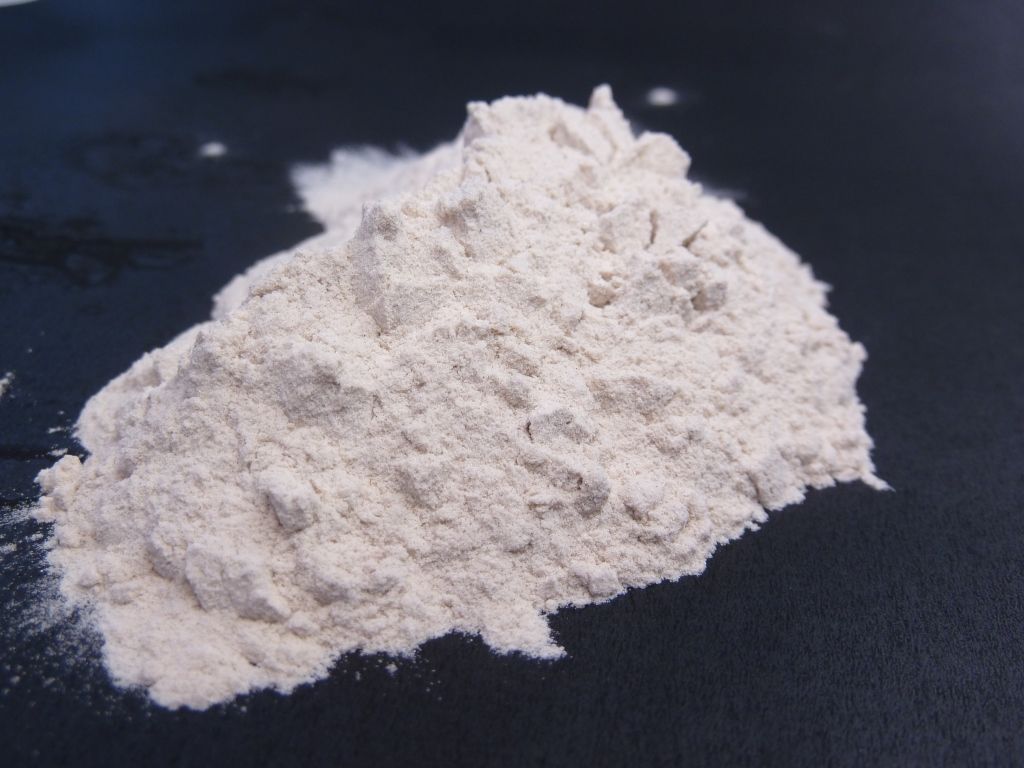
Gum Arabicis aNatural productwith many useful properties. It just shows a lotlow ash valuesand is one of the oldest known binding agents and is already mentioned in the Bible. Whether in cosmetics, food, rubber processing - it still has a variety of applications everywhere today. The product isground until fine as dustand has a slight pink color. It is obtained from acacia trees.Product dataCAS No.: 9000-01-5 alcohol soluble: nowater soluble: yes Drying loss: 8.3% (as delivered)Ash (C): 2.9% Granulometry: [d90 100µm]; [d50 63µm]; [d10 10µm]
Content: 0.1 Kilogramm (€23.80 / 1 Kilogramm)
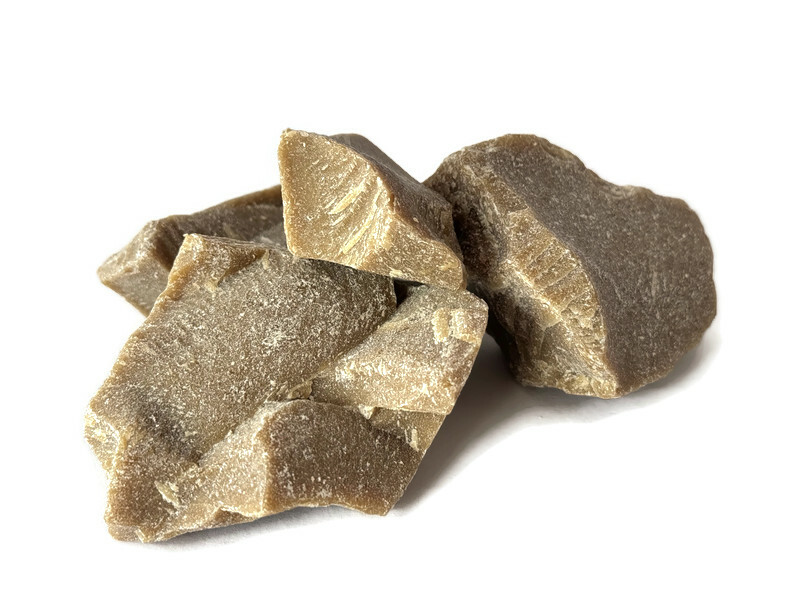
Shellac Wax – Bleached Premium Wax Our high-quality, bleached shellac wax is a natural product obtained through the purification and processing of shellac. It is ideal as a release agent, polishing agent, and protective coating for various industrial applications. Thanks to its unique properties, it is used in the cosmetic, pharmaceutical, and food industries. It is one of the hardest waxes after carnauba wax. Properties & Benefits: 100% natural and biodegradable Excellent water- and grease-repellent effect High melting point (70 – 86°C) for versatile applications Ideal coating agent Optimal solution for high-quality polishes and sealants Applications: Food industry: Gloss coating for fruits, confectionery, and coffee beans Pharmaceutical industry: Gastric-resistant coating for tablets Cosmetics: Ingredient in creams, lipsticks, and hairsprays Wood & furniture care: Natural polishing wax for fine wood surfaces Technical Specifications: Parameter Specification Ester number (mg/g) 30 – 70 Acid number (mg/g) 2 – 15 Saponification number (mg/g) 35 – 85 Iodine number (g/100g) 0.1 – 3 Ash max 1.0% Moisture max 1.0% Specific gravity @ 20℃ 0.93 – 0.98 Melting point (℃) 70 – 86
Content: 0.1 Kilogramm (€45.00 / 1 Kilogramm)

Flame sootorCarbon Black / Carbon Black / Lamp Black is produced by burning hydrocarbons with reduced oxygen supply. The flame black powder we offer is typically nanoscale. Among other things, it is also suitable as an extremely opaque black pigment. Possible applications: Additive in polymers Conductive paints (ESD applications) Polymer-based energy storage Black pigment (e.g. toner) Flame retardant coatings and much more. Chemical/physical examination: Average particle size: 95nm (0.095µm) - based on primary particlesResidue on 45µm sieve: 4ppm Toluene extractable components (DIN 53553): 0.010% CAS No.: 1333-86-4 Variety: 101 Carbon min.: 99.9% Opacity (ISO 787/16 & 24): 26.0% (ITRB) Blackness (DIN 55979): 210 PH value: 7.5 Tamping density: 260 g/l Dibutyl phthalate absorption: 0.118 dm³/100g" ThisDextrin (canary dextrin) will be outCornstarchwon. The starch is mixed with steam or catalytically active acid under increased temperature and pressure. This converts the otherwise insoluble starch into awater soluble product, which mainly asbinderapplies. A commonly known use is thisWet adhesive coating (also called gumming) of postage stamps and kraft paper tapes. However, it is also used as a food additive or as a binding agent in pharmaceuticals. The material isvery soluble in waterand binds even at low moisture levels. There are now many dextrin-based artists' colors on the market (mixture of dextrin and pigment, as well as water). Product dataCAS No.: 9004-53-9 Average particle size: 17.50 µmHumidity: max. 10% [MCL 002B]pH value: 2.5 - 4.0 [20% solution]RVA viscosity: 960-2040 mPa*s [MCL 106T]Insoluble components: max. 2% [MCL 340A]Reduced sugar: max. 4.2% [MCL 050A]Bulk density: approx. 0.55 kg/dm³ [MCL 095A]
Content: 0.1 Kilogramm (€34.50 / 1 Kilogramm)

This aluminium powder is made in Germany. A previously produced aluminum spray grit is ground in ball mills with the help of fatty acids . Here the primary particles undergo a change in size, but more importantly a change in shape. The resulting particles are now platelet-shaped and act like tiny mirrors.The powder is therefore an excellent metallic effect pigment for varnishes, paints or, more recently, screeds. Preferred areas of applicationFiller in polymer processing (2K systems, fillers, varnishes, paints)Aerated concreteChemical reducing agent / gas generatorsPyrotechnicsTypical analysis valuesFormula: AlActive metal content: 93.2%Sieve residue: 0.1% (at 45µm)Acetone-soluble components: 1.7%Wetting on water: 9260cm²/gParticle shape: platelet-shaped (flaky)CAS No.: 7429-90-5Signal word: ATTENTION! Danger warnings H228: Flammable solid H261: Contact with water produces flammable gases. Safety instructions P210: Keep away from heat, hot surfaces, sparks, open flames and other types of ignition sources. No smoking. P370 + P378: In case of fire: Use metal fire powder to extinguish. P402+P404: Store in a closed container in a dry place.
Content: 100 Gramm (€0.03 / 1 Gramm)

This Brass powder ist speziell für optische und funktionelle Anwendungen hergestellt worden. Es wurde 1,5 % stabilized with 1.5% oleic acid.In der plastics processing erzielt es herausragende Effekte bei HDPE, LDPE,ABS oder gar PVC. Gerade in diesem Bezug sollte bei der Fertigung von masterbatches darauf geachtet werden, dass das Pulver nur geringstmöglichen Scherkräften und Verweildauern bei hohen Temperaturen ausgesetzt wird. Beide Faktoren könnten sonst das optische Endergebnis negativ beeinflussen. Ebenfalls ist dieses Pulver bestens auf den Einsatz in Farben/Lacken/2K-Harz und screen-printingverfahren abgestimmt. Bereits ein Verhältnis von 5/100 (Pigment/Bindemittel) ist für ein optisch hochwertiges Ergebnis ausreichend. Sie erhalten einen beeindruckenden gold-metallic effect - die Oberfläche sieht anschließend wie ein polished brass sheet aus. Please observe the following during processing: screen-printing: The mesh size should be three times larger than the powder D90 value. aerosol spray cans: The powder D90 value should be at least three times smaller than the nozzle diameter. coatings/paints: Avoid mechanical stress from very fast-running agitators. This would damage the particles and destroy the metallic effect. Typical chemical and physical specifications:Purity of the base metal: 99,9 %Colour shade: ReichbleichgoldLaser diffraction: D10 2,75µmLaser diffraction: D50 9µmLaser diffraction: D90 20,5µmBulk density: ca. 0,95 g/cm³Hiding power: ca. 7500 cm³/gAcetone-soluble constituents: 1,5 % (Ölsäure)CAS No.: 7440-50-8 Signal word: Danger! Hazard statements H228 - Flammable solid. H302 - Harmful if swallowed H400 - Very toxic to aquatic life H411 - Toxic to aquatic life with long-lasting effects. Precautionary statements P210 - Keep away from heat, hot surfaces, sparks, open flames and other ignition sources. No smoking. P273 - Avoid release to the environment. P301+P310 - IF SWALLOWED: Immediately call a POISON CENTER or doctor. P330 - Rinse mouth P370+P378 - In case of fire: Use metal fire powder, cement or sand for extinction
Content: 10 Kilogramm (€41.00 / 1 Kilogramm)